By BANNERNEWS Reporter
The Kebbi State Police Command has confirmed that operatives of its Counter Terrorism Unit (CTU) foiled a night attack by suspected Lakurawa terrorists along the Maje border road in Bagudo Local Government Area.
Police Public Relations Officer, Bashir Usman, disclosed this in a statement issued on Saturday in Birnin Kebbi. He said the attackers struck under the cover of darkness, allegedly disguising their movement with a herd of cattle.
According to the statement, CTU operatives were on alert and swiftly engaged the assailants in a gun duel, forcing them to retreat.
Although some temporary security structures were damaged during the exchange, no casualties or injuries were recorded.
The command said security has since been reinforced along the border axis, adding that the area is now calm and under control.
Police also warned residents, particularly herders and livestock owners, against moving cattle at night in ways that could be exploited by criminal elements.
“The Commissioner of Police has directed that firm and lawful action will be taken against any suspicious movement or unlawful activity linked to night grazing,” the statement added.
Month: February 2026
-

Police Foil Lakurawa Night Attack in Kebbi Border Community
-
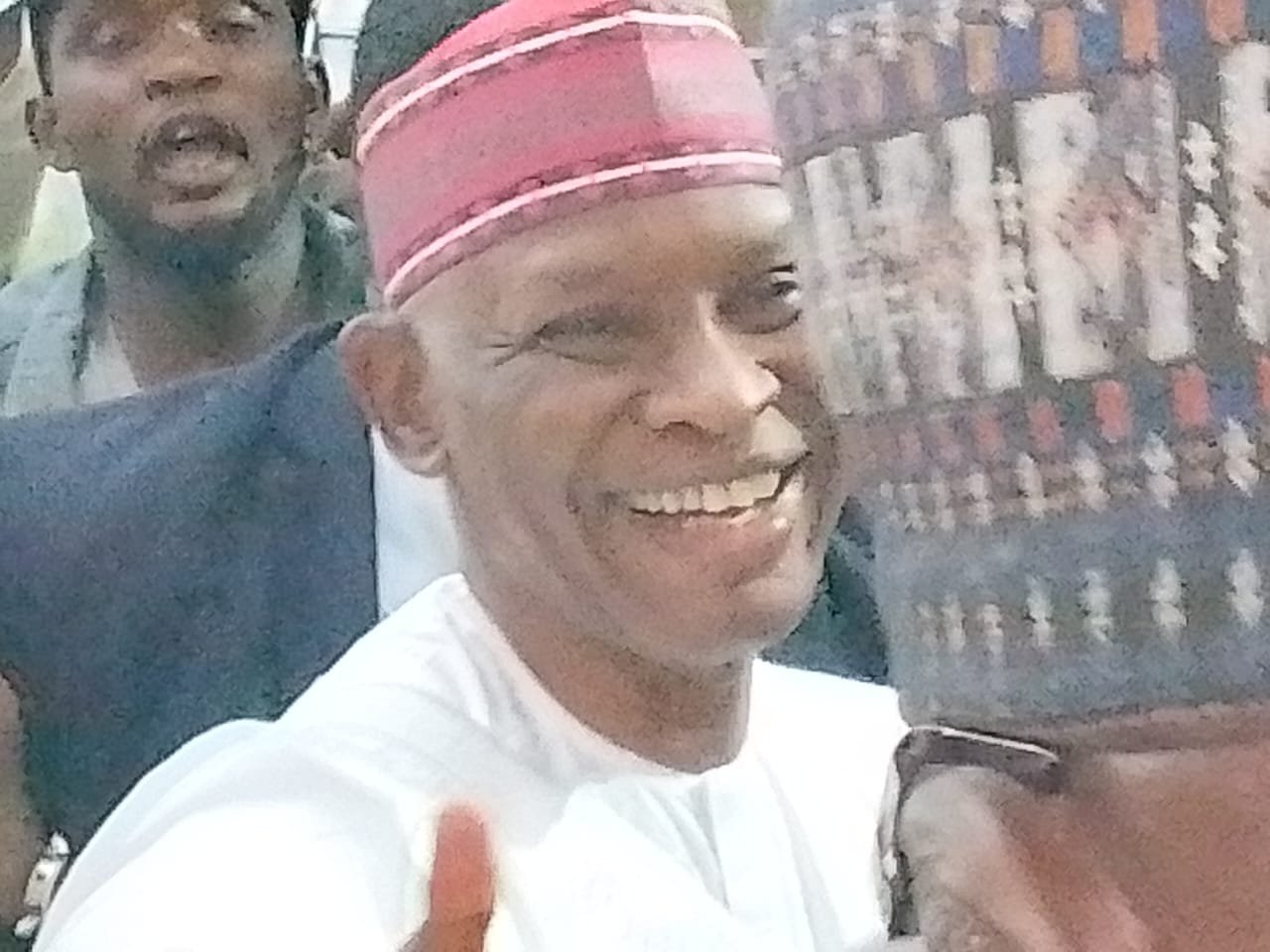
2026 Ramadan Feeding Committee Inaugurated in Kano
By BANNERNEWS Reporter
Kano State Governor, Abba Kabir Yusuf, has inaugurated the 2026/1447AH Ramadan Feeding Programme Committee to oversee the distribution of food items to residents across the state during the holy month of Ramadan.
A statement by the governor’s spokesperson, Sunusi Bature Dawakin Tofa, said food distribution began on Thursday, February 19, 2026, at 115 feeding centres across the eight metropolitan local government areas of Kano State.
Governor Yusuf said the initiative is aimed at supporting the less privileged and easing the burden of fasting. He urged committee members to carry out their duties with dedication, transparency, and fear of God to ensure the programme’s success.
The committee is chaired by the Commissioner for Religious Affairs, Ahmed Tijani Auwalu, and includes the Commissioners for Local Government, Health, and Environment—Muhammad Tajo Othman, Dr. Abubakar Labaran Yusuf, and Dr. Dahiru Hashim, respectively—alongside Sheikh Ibrahim Shehu Maihula, Chairman of the Hisbah Board.
Other members include special advisers, heads of relevant agencies, chairmen of the eight metropolitan local governments, State Accountant General Jamila Magaji Abdullahi, and Chairman of the Zakkat Commission, Barrister Habibu Dan’almajiri.
Governor Yusuf reaffirmed that the Ramadan Feeding Programme remains a key social intervention of his administration, designed to promote unity and provide support to vulnerable residents across the state. -
2027: ADC Surges in Nasarawa as 400,000 New Members Join
By BANNERNEWS Reporter
The African Democratic Congress (ADC) in Nasarawa State has recorded a surge of 400,000 new members, boosting the party’s prospects ahead of next year’s governorship election.
Chairman of the Transitional Leadership Team, Mr. John Michael-Abdul, disclosed the development at an expanded stakeholders meeting in Lafia, describing it as a major boost to the party’s electoral ambitions in the state and beyond.
He said the new members submitted their names and details to a committee established to register supporters across all 13 Local Government Areas of Nasarawa State.
Michael-Abdul, a former Deputy Governor, expressed confidence that ADC would secure victory in 2027, citing the party’s track record and the competence of its members.
The party also announced plans to issue membership cards and launch an online registration drive to capture members’ records.
The meeting was attended by Senator Patricia Akwashiki, National Deputy Chairman of ADC, who welcomed decampees from the Labour Party, led by Eng. Gambo Abdullahi-Balarebe. Akwashiki described ADC as “the present and future of the country,” emphasizing the party’s capacity to address national challenges.
Other dignitaries, including Senator Suleiman Adokwe, Chief of Staff to National Chairman David Mark, reiterated the party’s commitment to justice, equity, and internal democracy. “We will not impose candidates for elections. Whoever emerges in our primaries stands, and the party will support the person, irrespective of status,” Adokwe said.
He added: “We aim to present competent and popular candidates chosen by majority votes, ensuring fair competition and avoiding unnecessary rancour.” -
FG’s Inaction on 76 Oil Wells Disappointing, Says ADC Chieftain
By BANNERNEWS Reporter
A chieftain of the African Democratic Congress (ADC) in Cross River State, Austine Ibok, has expressed disappointment over the federal government’s apparent inability to resolve the protracted dispute between Cross River and Akwa Ibom states over ownership of 76 oil wells.
The Supreme Court has twice ruled in favor of Akwa Ibom State, but federal agencies are still examining technical aspects of the matter, delaying final resolution.
In a statement from Calabar, Ibok, a former Labour Party chairman in the state, criticized the Federal Government for failing to demonstrate the leadership, neutrality, and statesmanship needed to settle the dispute amicably.
“We condemn the failure of the APC-led Federal Government to deploy a sincere political solution in resolving the oil well dispute between two sister states governed by the same political party,” he said.
Ibok, who also convenes the ADC Coalition Movement in Cross River State, warned that the federal government’s inaction has prolonged economic hardship and stalled development in the state. He stressed that the welfare and dignity of Cross Riverians should not continue to suffer due to poor leadership and lack of political will at the federal level.
He added that a new federal government under the ADC would prioritize dialogue, fairness, and political solutions to ensure both states benefit equitably in the true spirit of unity and federalism.
While critical of the federal government, Ibok commended Governor Bassey Otu for his courage and determination in pursuing the recovery of lost assets, including the Tinapa Business Resort and the disputed oil wells. “His commitment reflects a genuine desire to reposition Cross River State for prosperity and self-reliance,” he said.
He urged all Cross Riverians—home and diaspora, traditional rulers, youths, women groups, civil society, and political parties—to rise above partisan interests and support the state government’s efforts to reclaim economic rights. “This is not a partisan struggle; it is a collective fight for justice, economic survival, and the future of our children,” Ibok emphasized.
Despite the praise, Ibok confirmed that the ADC intends to challenge the ruling APC and called on the state governor to align with the right party to avoid the bandwagon effect of the ADC coalition in 2027. “The time has come for decisive change, responsible leadership, and renewed commitment to justice for Cross River State,” he said.
He concluded: “The ADC Coalition Movement in Cross River State and Bakassi Local Government calls on all lovers of our state to support the African Democratic Congress as the credible and viable alternative in 2027.”
If you like, I can also produce an even snappier 8-paragraph version for quick newspaper print or online reading that hits the key points without losing context. Do you want me to do that? -

Camera Trap Captures Rare Cross River Gorilla in Afi Sanctuary, Sparks Renewed conservation Call
By BANNERNEWS Reporter
A rare camera trap image from the Afi Mountain Wildlife Sanctuary has provided fresh evidence of the continued survival of the critically endangered Cross River gorilla, renewing calls for stronger protection of one of Africa’s rarest great apes.
The Cross River gorilla, the most endangered of the four gorilla subspecies, is classified as Critically Endangered, with fewer than 300 individuals believed to remain in the wild. The species is found only within a limited mountainous forest region spanning parts of Nigeria and neighboring Cameroon.
Conservation experts say sightings of the elusive primate are extremely rare, as the animals avoid human contact and live in remote forest terrain. Most scientific confirmation of their presence comes not from direct observation, but from indirect evidence such as nesting sites and motion-triggered camera trap images.
The latest photograph, taken deep within the sanctuary’s dense rainforest, underscores the ecological importance of protected forest corridors in Cross River State, which remains the species’ last stronghold in the country.
The Wildlife Conservation Society (WCS), one of the leading conservation groups working in the region, has continued to support protection efforts across three critical sites in the state. These include Afi Mountain Wildlife Sanctuary, the Mbe Mountains, and the Okwangwo Division of Cross River National Park.
According to conservationists, the species faces persistent threats from habitat destruction, forest fragmentation, and occasional hunting, all of which have contributed to its drastic population decline over the decades.
Environmental advocates say the latest camera trap evidence offers both hope and urgency—hope that conservation efforts are yielding results, and urgency for government authorities, host communities, and international partners to intensify measures to preserve the remaining habitat.
They stress that protecting the Cross River gorilla not only safeguards a unique species but also preserves the biodiversity and ecological balance of one of West Africa’s most important rainforest ecosystems.
Caption: Camera trap image of a critically endangered Cross River gorilla recorded in Afi Mountain Wildlife Sanctuary, Cross River State. Photo credit: Wildlife Conservation Society.
-

Edo, Delta Monarchs Hail Olumba Obu as Supernatural Leader
By BANNERNEWS ReporterTraditional rulers and palace chiefs in Delta and Edo States have hailed the Universal Monarch, His Holiness Olumba Olumba Obu, as a supernatural teacher and divine personality whose presence brings blessings, peace and spiritual upliftment.The monarchs spoke separately during individual visits by the spiritual leader to their palaces in both states as part of his ongoing tour, which has drawn reverence from traditional institutions and followers of the Brotherhood of the Cross and Star, a universal spiritual movement.At Ubulu Uku in Aniocha South Local Government Area, the Universal Monarch declared divine blessings upon the kingdom during an official visit to High Chief Chidimma Keke, the Iyi-Ibor Aka Ego I.The event marked what palace authorities described as a historic spiritual encounter for the community. In his welcome address, High Chief Keke expressed gratitude for the visit, describing it as the highest spiritual honour ever accorded his throne.He said the presence of the Universal Monarch had ushered in renewed peace, favour and hope for accelerated progress across his kingdom.Representing the Universal Monarch, Patriarch Christ Servant Innocent Omini formally pronounced blessings upon the throne and people, assuring that the impact of the visit would resonate across generations.He noted that divine presence always brings transformation wherever it manifests.The Delta State Administrator of BCS, Princess Osisike, and members of her executive council were also present to receive the delegation, underscoring the significance attached to the visit within the Brotherhood’s leadership structure.Palace sources said the visit formed part of the Universal Monarch’s wider tour across states and countries to sensitise about upcoming 25th anniversary celebration of His Holiness Olumba Olumba Obu’s coronation as the King of kings and Lord of lords.In neighbouring Edo State, a similar atmosphere of reverence greeted the Universal Monarch during his visit to the palace of High Chief George Obasagi, who described the occasion as a divine continuation of blessings upon his family lineage.High Chief Obasagi recounted how his father had experienced a life-changing spiritual encounter with the Universal Monarch decades ago, which he said transformed the fortunes of their family.He noted that the latest visit reaffirmed that enduring spiritual connection.Moved by the honour, the Edo monarch pledged to attend the forthcoming Silver Jubilee celebration of the Universal Monarch’s coronation scheduled to hold from April 13 to 19, 2026, at the Brotherhood’s world headquarters in Calabar.He described the invitation as both a privilege and a divine call.Speaking through his representative, PCS Innocent Omini, the Universal Monarchextended blessings upon the Edo traditional ruler and his household, declaring that divine favour, peace and upliftment would remain permanently established within the family and kingdom.The Edo State Administrator, Christ Ambassador Martins Monyei, alongside members of his executive council and sensitisation teams, witnessed the visit, which observers say has further strengthened ties between traditional institutions and the Brotherhood as preparations intensify for the forthcoming jubilee celebrations.End
-

APC Reaffirms Commitment to Internal Democracy in Cross River Congresses
By BANNERNEWS Reporter
Committees supervising the ward and local government congresses of the All Progressives Congress in Cross River State have reaffirmed their commitment to peaceful, transparent, and credible exercises across the state.
Chairman of the Local Government and Ward Congress Committee, Samuel Yanap, gave the assurance during an inspection in Calabar, saying committee members were collaborating closely with party leaders and stakeholders to ensure all arrangements comply with party guidelines.
He noted that the congresses, which began on February 18 with ward executive elections, will continue on February 21 for local government executives and conclude on March 3, 2026, for state executive congresses, following the timetable released by the party’s National Secretariat.
Yanap urged members to remain law-abiding and united, stressing that the exercises are crucial for strengthening the party’s grassroots structures and promoting internal democracy.
Secretary of the Appeal Committee, Paul Domseng, confirmed that the panel is on ground to receive and review petitions from aggrieved members, assuring that all complaints would be addressed fairly.
Chairman of the Appeal Committee, Prince Ademola Adetokunbo, added that the committee was deployed by the national leadership to guarantee due process, ensure fairness, and uphold the party’s constitution during the exercises.
State APC Chairman, Ntufam Ekum Ojogu, also assured members that adequate security arrangements have been put in place across all 18 local government areas to guarantee a hitch-free and successful congress.
-

APC Stakeholder Protests Alleged Secret Compilation of Umon North Ward Executive List
By BANNERNEWS Reporter
A stakeholder of the All Progressives Congress (APC) in Umon North Ward, Biase Local Government Area of Cross River State, Engr. Egan Adat Okon-Effiong, has formally rejected the alleged compilation of a new ward executive committee list, describing the process as secretive and unconstitutional.
Okon-Effiong, in a letter dated February 19, 2026, and addressed to the APC State Chairman, with a copy to the Biase Local Government Council Chairman, claimed the list was reportedly drafted in a private residence without consultation with duly recognised ward stakeholders.
She alleged that a small group of individuals privately assembled and unilaterally prepared what they presented as a leadership list for the ward, warning that such action undermines democratic norms and violates the party’s constitution.
According to her, key ward figures and statutory stakeholders were excluded from the alleged process, including the Deputy Ward Leader, the Commissioner for Humanitarian Affairs, and the councillor representing Umon North Ward, as well as other recognised party leaders.
She further stated that she was neither informed nor invited to any meeting where such decisions were taken, stressing that no transparent congress or properly convened stakeholders’ forum was held to legitimise the exercise.
The APC stakeholder argued that the alleged action constitutes a breach of internal party democracy and contradicts provisions of the party’s constitution, which emphasise transparency, inclusiveness, and due process in the formation of ward executive committees.
Okon-Effiong warned that excluding stakeholders from leadership decisions could weaken grassroots mobilisation, create internal divisions, and damage the party’s credibility among members and the electorate.
She maintained that party leadership must emerge through constitutionally recognised procedures, involving statutory officers and stakeholders, rather than through what he described as selective consultations held in private settings.
The stakeholder called on the party leadership to clarify the circumstances surrounding the alleged list, disclose those involved in its compilation, suspend any attempt to implement it, and convene a properly constituted stakeholders’ meeting in line with the party’s guidelines.
She emphasised that her objection was not driven by personal interest but by the need to protect internal democracy, transparency, and unity within the party, insisting that leadership legitimacy must be earned through due process and broad-based participation.
-

Armed Men Disrupt SSANU Election at UNICAL, Union Alleges Interference
By BANNERNEWS Reporter
The quadrennial congress and election of the Senior Staff Association of Nigerian Universities (SSANU) at the University of Calabar were disrupted on Thursday after armed men reportedly invaded the venue, forcing a halt to proceedings.
National officers of the union, led by Deputy National President, Comrade Leku Ador, were in Calabar to supervise the exercise, which is held every four years to review the performance of branch executives and elect new officers.
Other members of the delegation included National Vice-President (South-South), Comrade Cheta Azuma; National Treasurer, Comrade Uchenna Nwokeji; and National Trustee, Comrade Monday Izu. The officials had earlier paid a courtesy visit to Vice-Chancellor, Prof. Offiong Offiong, to formally notify the university management of their presence and mission.
University sources said the Vice-Chancellor was unavailable at the time and was represented by a Deputy Vice-Chancellor. The union delegation was reportedly informed that although approval had been granted for the congress, clearance for the venue was still under consideration due to security concerns.
According to SSANU officials, the Deputy Vice-Chancellor cited unspecified intelligence reports suggesting the possibility of disruption and requested the national officers to sign an undertaking accepting responsibility for any security incidents. The union leaders declined the request and proceeded to the congress venue.

Union members had already assembled when the national officers arrived, and the gathering began peacefully. However, the meeting was interrupted when armed men entered the venue and instructed members to stop the exercise, citing security reasons.
The incident caused panic among some members, although no injuries were reported. Union officials said they continued consultations and resolved to extend the tenure of the existing executive by three months, in line with constitutional provisions, pending a fresh election.
SSANU officials expressed concern over the disruption and called for an environment that allows unions to conduct their internal processes without hindrance. They maintained that the union remained committed to due process and peaceful engagement.
Reacting to the incident, the university’s Public Relations Officer, Mr Eyo Effiong, denied allegations that armed thugs were deployed to disrupt the congress. He said those present were regular university security personnel assigned to maintain order and ensure safety on campus.
The development has drawn attention to labour-management relations within the institution, with observers calling for dialogue between university authorities and union leaders to prevent further tension and ensure stability in the academic environment.
-

OPINION: Between Competing Mandates -The Uncertain Place in Rivers Loyalists
By Justice Osai Ahiakwo
Between the political mandate of President Bola Tinubu and the entrenched influence of Nyesom Wike lies a pressing question: Where do Rivers loyalists truly stand?
The political terrain in Rivers State is no longer defined solely by local alliances or state-level calculations.
It has evolved into a contest shaped by national power dynamics, strategic positioning, and legislative maneuvering.
In this shifting landscape, loyalty is being tested, recalibrated, and, in some cases, redefined.
The coming into force of the 2026 Electoral Act was widely challenged as Section 60 was crafted with intent to manipulate election results.
This has defeated the true purpose of electronic transition, a milestone intended by the repelled 2022 Electoral Act that seeks to strengthen transparency, accountability, and credibility in Nigeria’s electoral process.
The original concept was to introduce mechanisms designed to reduce manipulation and improve public confidence in elections.
Conversely, electoral laws do not operate in isolation from political actors.
Their effectiveness depends on the integrity of those who interpret and implement them.
Where political interests dominate institutional safeguards, even well-crafted legislation can be repurposed to serve narrower objectives.
The release of the 2027 general election timetable by the Independent National Electoral Commission (INEC) signaled the formal commencement of political calculations toward the next electoral cycle.
Electoral timetables are not mere administrative notices; they shape party primaries, coalition-building, and campaign strategies.
Yet, the proximity between the release of the timetable and subsequent amendments to the electoral framework raises legitimate concerns.
When the legal architecture governing elections is altered shortly after timelines are published, it inevitably invites scrutiny regarding motive and impact.
Amendments to electoral laws are not inherently problematic.
As democracies evolve, legal frameworks must sometimes be adjusted to address gaps or emerging realities.
However, drastic or hurried amendments risk destabilizing the status quo and generating perceptions of manipulation.
Stability in electoral rules is essential to maintaining trust.
When stakeholders suspect that rules are being recalibrated to favor certain interests ahead of 2027, confidence in the neutrality of the process weakens.
Within this broader national context, Rivers State occupies a sensitive position.
Historically marked by intense political rivalry and factional alignments, the state has long grappled with the influence of godfatherism and strongman politics.
What appears to be changing, evidently, is not the disappearance of these forces relocated.
The arena of contests is shifting from the state platform to the national stage.
Political control is no longer exercised solely through local patronage networks; it is increasingly tied to alignment with federal authority, as was the introduction of local government autonomy, creating direct links to the federal government.
This centralization of political power reshapes loyalty structures.
Rivers loyalists, particularly those who align with either Tinubu’s national mandate or Wike’s entrenched political influence, must now navigate a more complex terrain.
Allegiance is no longer simply about state-level solidarity.
It is intertwined with federal appointments, party machinery, and national calculations.
In this environment, loyalty risks become transactional rather than ideological.
The tension between federal influence and state autonomy is not new in Nigerian politics.
Political actors consolidate influence at the national level by altering the balance within federating units.
Decisions affecting Rivers and other APC States may increasingly be influenced by considerations external to the state’s immediate interests. For loyalists on the ground, this creates uncertainty:
Are they defending local mandates, or are they instruments in a broader national chess game?
Godfatherism and political gangsterism, though often criticized, have traditionally operated within defined state boundaries routinely controlled by some former and sitting governors.
Their shift toward national coordination suggests a more sophisticated consolidation of power.
Political survival now depends not only on local dominance but also on strategic proximity to central authority.
This transformation does not eliminate strongman politics who now is in charge of the national government. It indeed has elevated it.
For Rivers citizens and political stakeholders, the critical issue is accountability.
When political influence becomes centralized, it can weaken grassroots participation and diminish local voices.
Loyalists may find themselves defending positions that reflect national strategies rather than community priorities.
The danger lies in the erosion of democratic responsiveness to grassroots, where political allegiance overshadows public interest.
In the coming 2027 general elections, the interplay between legal reforms, national mandates, and state-level dynamics will define the political direction of Rivers State.
The question remains whether electoral processes will strengthen democratic competition or entrench centralized control.
Therefore, Rivers loyalists must confront a fundamental choice: align uncritically with power wherever it resides or insist that political mandates, whether national or state, remain accountable to the people.
The shifting ground of Nigerian politics reflects a broader struggle between institutional integrity and strategic power consolidation.
Where Rivers loyalists stand will depend on whether they prioritize loyalty to individuals or commitment to democratic principles, a decision that will determine not only political outcomes in 2027 but also the credibility of governance in Rivers State and by extension the Nigeria state.