Month: May 2026

  • 91 Senior Military Officers Tour Katsina on Community Security Study

    91 Senior Military Officers Tour Katsina on Community Security Study

    By BANNERNEWS Reporter, Katsina

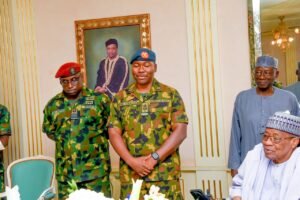
    No fewer than 91 senior military officers drawn from the Nigerian Army, Navy and Air Force, alongside participants from The Gambia, Côte d’Ivoire and Liberia, are on a study tour of Katsina State as part of efforts to deepen knowledge on community-based security management and governance strategies.

    The officers, who are participants of Senior Course 48 of the Armed Forces Command and Staff College, are undertaking the 2026 Nigeria Environmental Study Tour themed, “Promoting Community Engagement for Enhanced National Security and Prosperity.”

    Receiving the delegation at Government House, Katsina, Governor Dikko Umaru Radda said the choice of the state for the study tour reflected its growing profile as a model for community-driven security interventions in Nigeria.

    Radda noted that security challenges could not be resolved through force alone, stressing that sustainable peace requires broad community participation and coordinated responses among stakeholders.

    “Security is not something that can be resolved overnight. It requires a thorough understanding and a coordinated approach. Therefore, lasting peace depends on strong community involvement,” the governor stated.

    He explained that his administration adopted a community-based security strategy after identifying manpower and operational gaps within conventional security agencies, especially in remote communities where delayed responses often escalate security incidents.

    According to him, the establishment of the Katsina Community Watch Corps has strengthened intelligence gathering, improved rapid response capabilities and restored access to several communities previously threatened by insecurity.

    The governor described insecurity in the state as largely criminal, involving banditry, cattle rustling and kidnapping, adding that tackling the menace requires close collaboration among government, security agencies and local communities.

    He further highlighted the contributions of traditional rulers, religious leaders, youth groups and other community stakeholders in supporting peace-building and security efforts across the state.

    Earlier, the leader of the delegation, Brigadier General K. Rabiu, said the visit was part of a nationwide study tour aimed at exposing senior military officers to governance and security realities in selected states across the country.

    Rabiu explained that the Armed Forces Command and Staff College is a tri-service institution responsible for preparing officers for higher command and staff responsibilities, with participants drawn from Nigeria and allied African countries.

    He described Katsina State as an important reference point in community-driven security management, citing the strong synergy between government institutions and local communities in confronting insecurity.

  • IBB Pushes Grassroots Intelligence, Civil-Military Trust To Tackle Insecurity

    IBB Pushes Grassroots Intelligence, Civil-Military Trust To Tackle Insecurity

    By BANNERNEWS Reporter, Minna

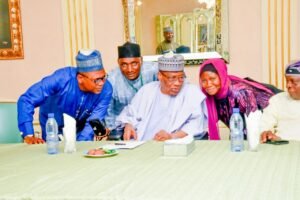
    Former Military President, Ibrahim Badamasi Babangida, has called for stronger community engagement and closer collaboration between citizens and security agencies as part of efforts to tackle Nigeria’s growing security challenges.

    Babangida made the call in Minna while receiving participants of Senior Course 48 of the Armed Forces Command and Staff College during their study tour to Niger State.

    The former Head of State described the tour’s theme, “Community Engagement for Enhanced National Security and Prosperity,” as timely and relevant to the country’s present security realities, stressing that intelligence gathering and sustainable peace efforts would be more effective when communities actively support security agencies.

    Hosting the delegation alongside former Osun State Sole Administrator, Olagunsoye Oyinlola, Babangida said study tours remained vital in sharpening the operational capacity and strategic thinking of senior military officers.

    He commended the Armed Forces Command and Staff College for sustaining professional military training and strategic learning, urging the participants to take full advantage of the exposure provided by the exercise.

    Leader of the delegation, Air Commodore O.O. Obasa, praised Babangida for his contributions to military education in Nigeria, particularly his role in the establishment of the college’s Department of Air Warfare.

    Obasa recalled that Babangida laid the foundation stone for the department on July 3, 1986, before commissioning it on July 4, 1987, describing the initiative as a major milestone in military training and national development.

    The delegation was led to Babangida’s residence by officials of the Niger State Government, with the Secretary to the State Government, Alhaji Abubakar Usman, represented by the Director of Administration in the SSG’s office, Alhaji Abdullahi Uregi.

    The visit formed part of a week-long study tour by the senior military officers to Niger State and ended with the presentation of a souvenir to Babangida in recognition of his contributions to the growth of military institutions in Nigeria.

  • NEMA Delivers Relief to Agbokim, Karaboat Fire Victims

    NEMA Delivers Relief to Agbokim, Karaboat Fire Victims

    By BANNERNEWS Reporter, Calabar

    Victims of recent fire disasters in Agbokim and Karaboat communities in Cross River State have received relief materials from the National Emergency Management Agency (NEMA).

    The intervention, carried out on Tuesday by NEMA’s Uyo Operations Office in Agbokim, Etung Local Government Area, featured the distribution of food items and building materials to affected residents.

    Items distributed included 600 bags each of 25kg rice and garri, 100 bags of 25kg beans, 400 bags of cement, as well as 60 cartons each of seasoning cubes, salt, vegetable oil and tomato paste.

    The relief followed the devastating January 19 inferno in Agbokim which destroyed houses and properties worth millions of naira.

    NEMA had, on January 27, conducted an on-the-spot assessment of the affected communities after receiving a distress report from the Cross River State Emergency Management Agency (SEMA).

    Speaking during the distribution exercise, Director-General of NEMA, Mrs. Zubaida Umar, sympathised with victims and reassured them of the agency’s commitment to providing prompt humanitarian support to disaster-hit communities across the country.

    Represented by the Head of Operations, NEMA Uyo Operations Office, Mrs. Mmandu Aisueni, Umar described the intervention as part of ongoing efforts to assist vulnerable persons affected by emergencies and disasters.

    Secretary to the Cross River State Government, Prof. Anthony Owan-Enoh, commended the Federal Government and NEMA for the swift response, while appealing for sustained support to cushion the hardship faced by affected residents.

    Speaking on behalf of beneficiaries, Mr. Manyo Ayuk expressed appreciation to the Federal Government, NEMA and the Cross River State Government, describing the assistance as timely and impactful for families struggling to rebuild their lives.

    The distribution exercise attracted government officials, traditional rulers, security agencies and members of the Nigerian Red Cross Society.

  • EFCC Hospital Raid Triggers Indefinite Strike by A’Ibom Health Workers

    EFCC Hospital Raid Triggers Indefinite Strike by A’Ibom Health Workers

    By BANNERNEWS Reporter, Uyo

    Health workers and medical doctors in Akwa Ibom State have embarked on an indefinite strike following the alleged invasion of the University of Uyo Teaching Hospital (UUTH) by operatives of the Economic and Financial Crimes Commission (EFCC), Uyo Zonal Directorate.

    The industrial action, which has paralysed activities in government hospitals across the state, followed Tuesday morning’s dramatic arrest of the Deputy Chairman of the Medical Advisory Committee (CMAC) of UUTH, Prof. Effiong Ekpe, and three other staff members.

    Eyewitnesses said two masked men wearing EFCC vests stormed the hospital premises and attempted to forcefully arrest one of the staff members, an action that drew resistance from workers and students within the facility. The situation reportedly escalated when additional operatives arrived at the scene.

    Hospital sources alleged that gunshots were fired into the air while tear gas was used to disperse workers and sympathisers who tried to stop the arrest. Some staff members were reportedly injured in the ensuing chaos, while several mobile phones were damaged as workers attempted to record the incident.

    Following the development, the Nigerian Medical Association (NMA) in Akwa Ibom State directed doctors to immediately withdraw services, while the Joint Health Sector Unions (JOHESU) also declared a total shutdown of hospital services in protest.

    Confirming the strike action, the Public Relations Officer of the NMA in the state, Dr Gabriel Eyo, described the incident as “an onslaught on the hospital and health workers.”

    He condemned the treatment meted out to Prof. Ekpe, a professor of cardiothoracic surgery, saying due process was ignored in carrying out the arrest.

    “In the early hours of this morning, masked men wearing EFCC jackets stormed the hospital premises, entered Prof. Effiong Ekpe’s office and assaulted him before dragging him away like a criminal,” Eyo alleged.

    He further claimed that the operatives fired shots and used tear gas on staff members and students who attempted to intervene, adding that even the hospital gate was allegedly damaged during the operation.

    According to him, the NMA considered the action traumatic and unacceptable, especially as Prof. Ekpe was reportedly preparing for surgery before he was taken away.

    Reacting to the incident, the Commissioner of Police in Akwa Ibom State, Baba Mohammed Azare, denied allegations of invasion, insisting that police officers only accompanied EFCC operatives on a lawful assignment.

    Azare explained that the EFCC was acting on a court directive in an ongoing case and had gone to the hospital to arrest a staff member who was required in court.

    “The EFCC went there on a legitimate assignment. I instructed a CSP to verify the identity of the operatives after the Chief Medical Director contacted me. We confirmed they were genuine EFCC personnel acting on a court order,” the police commissioner stated.

    He added that the Chief Medical Director of UUTH had been advised to grant the operatives access into the premises, stressing that the police did not invade the hospital but merely verified the operation.

  • Pomp, Pageantry as Olumba Obu’s Media Outfits Mark Anniversaries

    Pomp, Pageantry as Olumba Obu’s Media Outfits Mark Anniversaries

    By BANNERNEWS Reporter, Calabar

    Two leading media organisations in South-South Nigeria founded by the spiritual leader of the Brotherhood of the Cross and Star, His Holiness Olumba Olumba Obu, have rolled out drums and red carpets to celebrate their anniversaries and achievements.

    The media outfits — StarCross Television and Sparkling 92.3FM — have lined up week-long activities to commemorate their milestones and contributions to broadcasting within and outside Cross River State.

    StarCross Television, a quasi-religious cable television network established in May 2013, has expanded its reach globally with relay stations in South Africa and the United Kingdom.

    Sparkling 92.3FM, a commercial, general purpose news and entertainment radio station established in May 2019, was created to bridge the media gap in Cross River, Akwa Ibom and neighbouring southern states.

    Speaking on the anniversary, pioneer General Manager of Sparkling FM, Dr Effiong Nyong, said the station had distinguished itself through impactful public-oriented programmes.

    He singled out the station’s flagship early morning talk show, Let’s Talk Nigeria, describing it as a platform that has contributed meaningfully to national discourse and public enlightenment.

    Listeners who called into the station during the celebration described Sparkling FM as one of the leading broadcast stations in the region.

    The current head of the station, Mr Otobong Ekpenyong, assured listeners that the management would continue to develop engaging and audience-friendly programmes in line with standards set by broadcast regulatory authorities.

    Meanwhile, the Managing Director of StarCross Television, Ogar Osim, led his management team on a courtesy visit to the Nigeria Union of Journalists (NUJ), Cross River State Council, where he reflected on the station’s 13-year journey.

    According to him, the station’s success story would not be complete without acknowledging the support and professional contributions of journalists in the state.

    “We remember that before StarCross Television officially commenced transmission in 2013, members of the NUJ, including journalists from AIT and CRBC, made valuable recommendations that helped shape the station,” he said.

    Osim also expressed appreciation for the continued support, which the Brotherhood of the Cross and Star and its leader, His Holiness Olumba Olumba Obu, have received from journalists across the country.

    He noted that the spiritual leader had invested heavily in the station through training and capacity building for media personnel in the station in Europe, America, Asia and Nigeria, adding that such investments had helped position StarCross Television as a recognised global broadcaster.

    Osim further stated that the television station had played a major role in correcting negative perceptions about the Brotherhood of the Cross and Star, despite the enormous financial demands associated with cable television broadcasting.


    Also congratulating the media organisations, Cross River State Commissioner for Information, Dr Erasmus Ekpang, described Sparkling FM as a pioneer in community and citizens’ broadcasting.

    He commended the station for promoting inclusiveness, amplifying local voices and sustaining people-oriented programming that keeps listeners engaged throughout the day.

    “This milestone is a testament to your resilience, innovation and dedication to service,” Ekpang said.

    He urged both organisations to remain beacons of excellence and continue using broadcasting as a tool for positive social  Change across the South-South region.


  • Dignitaries raise concerns over governance, accountability at Bassey Andah memorial lecture

    Dignitaries raise concerns over governance, accountability at Bassey Andah memorial lecture

    By BANNERNEWS Reporter, Calabar

    Prominent Nigerians, academics and civil society leaders have expressed concern over declining standards of governance, accountability and integrity in the country at the 21st Professor Bassey Andah Memorial Lecture held in Calabar.

    The event was organised by the Bassey Andah Institute for African and Asian Studies in collaboration with the Professor Bassey Andah Memorial Foundation.

    The lecture, themed “Service with Integrity,” took place at the Senate Chamber of the University of Calabar and attracted academics, students, civil society groups and political stakeholders.

    Former Nigerian Ambassador to Ethiopia and Djibouti, Nkoyo Toyo, spoke extensively on political integrity and urged citizens to speak out against bad governance.

    Toyo lamented what she described as the erosion of transparency, accountability and ethical conduct in Nigeria, warning that the trend poses serious threats to national development and responsible leadership.

    According to her, many young Nigerians are growing up without appreciating the true value of integrity because corruption and impunity have become increasingly normalised.

    “Without integrity, a country cannot grow because you cannot have standards, accountability or transparency. People begin to do things anyhow because society accepts anything,” she said.

    The former envoy also criticised the current administration and the ruling All Progressives Congress, alleging failure in providing responsible leadership for Nigerians.

    She urged citizens to support leaders with competence, capacity and character, insisting that such values were critical for good governance.

    “There is no other way. If people do not have competence, capacity and character, they should not lead you,” Toyo added.

    Chairman of the occasion, Ekanem Ikpi Braide, described integrity as a vital requirement for sustainable leadership and national growth.

    Braide said universities and other institutions must go beyond academic excellence to emphasise character formation and moral values among young people.

    “Character comes first before learning. We may be doing well academically, but we must ask ourselves whether we are building character strongly enough,” she said.

    She also commended the family of late Professor Bassey Andah and the University of Calabar for sustaining the memorial lecture series for more than two decades.

    Director-General of the institute, Offiong Ani Offiong, stressed the need for ethical leadership and value-based service in national development.

    The event featured discussions on integrity, accountability, leadership and the role of institutions in promoting ethical values in society.

  • OPINION: Nigeria’s Emerging Political Order : Rivers State As A Test Case Of Legal Power Dynamics

    OPINION: Nigeria’s Emerging Political Order : Rivers State As A Test Case Of Legal Power Dynamics

    By Justice Osai Ahiakwo

    Nigeria’s political evolution is entering a decisive phase, one defined not merely by electoral cycles but by the increasing convergence of law, institutional control, and political strategy.

    Across the federation, the pursuit and retention of power are being reshaped by a more structured and legally mediated process.

    Within this emerging order, Rivers State stands out as a critical test case.

    The recent political developments in Rivers, including renewed moves to extend executive political relevance through the acquisition of nomination and expression of interest forms, are not isolated events.

    They reflect a broader national pattern in which political actors are recalibrating their strategies in response to an evolving legal framework, most notably, the Electoral Act 2026.

    Historically, Nigerian politics has been characterized by overt contestation mass mobilization, populist rhetoric, and, at times, direct confrontation.

    Rivers State exemplified this tradition in its most intense form, with politics shaped by entrenched rivalries, structural dominance, and high-stakes struggles for control.

    What is now unfolding suggests a shift in method, if not, in objective.

    The transition from visibly aggressive political engagement to quieter, more calculated maneuvers signals a transformation in how power is negotiated. Political actors are increasingly relying on procedural precision, institutional alignment, and legal positioning rather than sheer political force.

    These developments, though less dramatic in appearance, carry significant implications for democratic governance.

    At the heart of this transformation lies the Electoral Act 2026, which has introduced a more rigorous regulatory environment for electoral participation.

    Its provisions governing party primaries, candidate nomination processes, compliance timelines, and oversight mechanisms have collectively raised the stakes of legal conformity in politics.

    From a statutory interpretation standpoint, the Act does more than regulate elections; it restructures political behavior.

    By tightening procedural requirements and enhancing oversight, it compels political actors to operate within clearly defined legal boundaries.

    However, the same framework also creates opportunities for those with institutional advantage to deploy the law strategically.

    This duality is central to understanding Nigeria’s current political trajectory.

    On one hand, the Act promotes transparency, accountability, and internal party democracy.

    On the other hand, it enables a form of procedural dominance, where mastery of legal processes becomes a decisive factor in political success.

    Rivers State illustrates this tension vividly. The ongoing political recalibration within the state reflects not just a struggle for control but a contest over who best understands and navigates the legal architecture of power.

    The emphasis is no longer solely on political popularity but on the ability to align actions with statutory requirements while leveraging institutional influence.

    A particularly sensitive dimension of this legal-political interplay is the question of structural advantage within the electoral system.

    While the Electoral Act 2026 does not explicitly sanction manipulative practices such as gerrymandering, its interaction with constitutional provisions on constituency delineation raises important questions about representational equity.

    The authority of the Independent National Electoral Commission to define and review electoral boundaries remains a critical factor in this regard.
    Although exercised within constitutional limits, such powers inevitably shape the terrain on which political competition occurs.

    In a system where margins of victory can be narrow, even subtle structural adjustments may carry significant political consequences.

    Judicial oversight, traditionally a stabilizing force in Nigeria’s electoral process, has tended to emphasize strict compliance with statutory provisions.

    Courts have consistently prioritized procedural integrity, often refraining from delving into the political implications of their decisions.

    This approach reinforces the centrality of legal correctness while leaving broader questions of fairness and equity largely within the political domain.

    Within this framework, Rivers State emerges as more than a subnational theatre of contestation; it becomes a microcosm of Nigeria’s evolving political order. The state’s internal dynamics—marked by strategic realignments, institutional maneuvering, and legal contestation, mirror trends are observable at the national level.

    The implications of this shift are strategically profound.

    As legal frameworks become more central to political competition, the nature of democratic engagement is inevitably altered.

    Elections risk becoming less about direct voter persuasion and more about procedural navigation.
    Political success may increasingly depend on legal expertise and institutional access rather than grassroots connection.

    This development presents both promise and peril. On the positive side, a law-driven political process can reduce arbitrariness, enhance predictability, and strengthen institutional accountability.

    It encourages discipline among political actors and provides clearer standards for evaluating electoral conduct.

    Conversely, there is a real danger that excessive reliance on procedural mechanisms may alienate the electorate. When legal strategy overshadows popular participation, democracy risks losing its substantive essence. The legitimacy of governance depends not only on adherence but also on the perception that those rules produce fair and representative outcomes.

    For policymakers, legal practitioners, and the judiciary, the challenge is to strike a balance between procedural rigor and democratic inclusiveness.

    The Electoral Act 2026 must be interpreted and applied in a manner that preserves both legal certainty and electoral fairness. Where ambiguities arise, they should be resolved in favour of transparency, equity, and the broader public interest.

    Interestingly, Nigeria stands at the threshold of a new political era one in which the boundaries between law and politics are increasingly blurred.

    Rivers State, in its current trajectory, offers a revealing glimpse into this transformation.

    It demonstrates how power can be pursued, contested, and consolidated within the framework of legal structures.

    Whether this emerging order will deepen democratic practice or simply redefine the mechanisms of control remains an open question.

    The answer will depend not only on the content of the law but on the integrity of its application and the vigilance of those entrusted with its enforcement.

    In this unfolding landscape, one reality is clear: the future of Nigerian politics will be shaped as much in courtrooms and regulatory bodies as it will be at the ballot box.

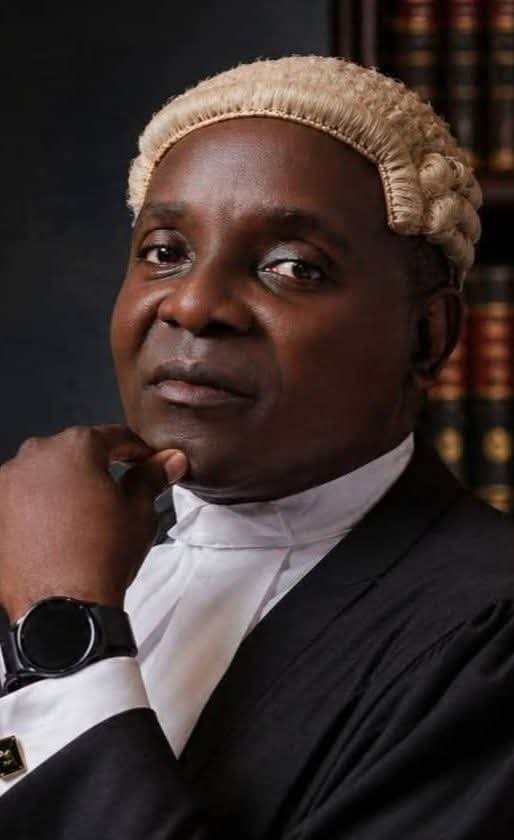
    Justice Ahiakwo is a legal practitioner, author and public issues analyst.

  • OPINION: PDP Presidential Candidate in Sight: Why Sandy Onor and His Burden of Electoral Irrelevance Should Not Be Taken Seriously

    OPINION: PDP Presidential Candidate in Sight: Why Sandy Onor and His Burden of Electoral Irrelevance Should Not Be Taken Seriously

    By: Godwin Bisong

    By every political measurement, presidential ambition must rest on credibility, electoral strength, grassroots acceptance, and proven leadership.

    It cannot be built on personal wishful thinking, elite lobbying, or carefully packaged political deception.

    This is why any attempt to project Senator Sandy Onor as a serious PDP presidential contender deserves closer scrutiny-and should not be taken seriously.

    Politics, especially at the presidential level, is not charity. It is not a reward for persistence in and around the Federal Capital Territory Authority (FCTA) Chief Executive.

    It is a contest of structure, influence, and proven capacity to mobilize people.

    Unfortunately, the records do not support the narrative being constructed around Sandy Onor.

    The most basic test of political relevance begins at home. Can a politician command his ward? Can he win his polling unit? Can he deliver his local government? These are not extraordinary expectations; they are the minimum requirements for anyone seeking higher office.

    Yet, during the 2023 governorship election in Cross River State, Sandy Onor failed these basic tests. He lost his ward, lost his polling unit, and lost his local government.

    A politician unable to secure victory within his immediate political environment cannot credibly market himself as a national candidate capable of leading Nigeria.This is not personal criticism; it is political reality.

    Even within his supposed political base in Usofang and across the wider Etung local government political structure, there is no visible evidence of strong electoral control.

    His inability to establish dominant grassroots support raises serious questions about the foundation of any presidential aspiration.

    Presidential candidacy requires national acceptability, but national ambition without local legitimacy is political fiction.

    This is why His Excellency, President Bola Ahmed Tinubu GCFR and the larger political establishment must be careful of what can best be described as a Greek gift- carefully packaged loyalty that conceals personal ambition.

    Political actor who failed to secure trust at home even among his Peoples Democratic Party PDP family in Cross River State, often seek relevance by presenting himself as strategic ally at the center.

    Mr. President must not be deceived by such calculated positioning.
    Cross River State remains firmly aligned with President Tinubu’s leadership and re-election project because the people recognize visible governance and stability.

    The performance of Governor Bassey Otu across infrastructure, governance reforms, security, economic repositioning, and people-centered administration has further deepened public confidence in progressive leadership.

    Cross Riverians understand performance, and they know the difference between governance and political noise.

    The attempt to manufacture a presidential profile around Sandy Onor ignores one important principle: numbers do not lie.

    The 2023 governorship election results remain public evidence of where political strength truly resides. The votes recorded across local governments clearly expose the limits of his political influence.

    Before anyone begins to dream of Aso Rock, they must first answer for their performance at home.

    Presidential ambition is serious business. It demands sacrifice, public trust, and measurable political capital. It cannot be sustained by media narratives alone or by proximity to Abuja power circles.

    Those pushing the illusion of Sandy Onor as a viable PDP presidential figure are selling fantasy, not strategy.

    Cross River is not confused.The people know where they stand. They stand with progress, stability, leadership and renewed hope agenda that delivers results.

    Cross River is for President Tinubu.And any so-called PDP presidential project built on electoral irrelevance is, quite simply, dead on arrival.

    Their 2031 calculation in Cross River State is already known to all and sundry, and the citizens are saying never again to a somersaulting caterpillar that destroys rather than constructs.

    Comrade Godwin Ogar Bisong is a former PDP member and public affairs analyst. He writes from Ikom, Cross River State.

    Ogarbisong72@gmail.com

  • Navy Renovates Adamawa School, Expands Learning Facilities in Mayo-Belwa

    Navy Renovates Adamawa School, Expands Learning Facilities in Mayo-Belwa

    By BANNERNEWS Reporter, Yola

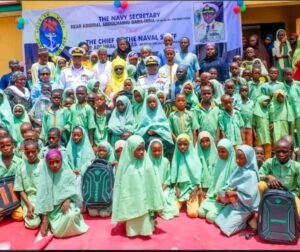
    The Nigerian Navy has strengthened educational infrastructure in Adamawa State with the renovation of six classroom blocks and the construction of toilet facilities at Central Primary School, Mayo-Belwa Local Government Area.

    The intervention, carried out under the Navy’s corporate social responsibility programme, was commissioned in Mayo-Belwa by the Chief of Naval Staff, Vice Admiral Idi Abbas, who said the initiative was part of efforts to give back to communities and support national development.

    Represented by the Director of Veterans Affairs, Rear Admiral Raheem Taofeek, the Naval Chief explained that the project aligned with President Bola Ahmed Tinubu’s Renewed Hope Agenda and was facilitated by the Navy Secretary, Rear Admiral Abdulhamid Baba-Inna, in his hometown.


    Abbas urged members of the host community to protect and make proper use of the facilities, stressing that the Navy remained committed to supporting initiatives that improve the wellbeing of Nigerians.

    He also reaffirmed the commitment of the Nigerian Navy to defending Nigeria’s territorial integrity and collaborating with other security agencies to tackle the country’s security challenges.

    Speaking at the event, Rear Admiral Baba-Inna said the project was designed to create a more conducive learning environment for pupils and teachers.

    According to him, the intervention falls within the Nigerian Navy’s Civil-Military Cooperation framework aimed at building stronger ties between the military and civilian population.

    He noted that the renovated classrooms and offices were furnished with chairs, tables and solar-powered lighting systems to improve security and enhance teaching and learning activities within the school.

    Baba-Inna further called on teachers, pupils and community leaders to take ownership of the facilities to ensure their sustainability and long-term impact.

    Also speaking, Member I of the Adamawa State Universal Basic Education Board (ADSUBEB), Mr. Adiyal Kurdah, commended the Nigerian Navy for the initiative, describing it as a major boost to educational development in the area.

    Representing the Lamido of Adamawa, Alhaji Muhammadu Barkindo Aliyu Mustapha, the District Head of Mayo-Belwa, Alhaji Ardo Bamanga, described the project as a lasting legacy that would help shape future generations into responsible citizens.

    The event also featured the distribution of learning materials to pupils, tree planting, cultural performances and award presentations, while additional facilities including instructional materials and solar-powered installations were handed over to the school.

  • C/River Targets Sports Revival,, Names 27 Sporting Associations

    C/River Targets Sports Revival,, Names 27 Sporting Associations

    By BANNERNEWS Reporter, Calabar

    The Cross River State Sports Commission has intensified efforts to revive sports development in the state with the inauguration of 27 sporting associations aimed at repositioning the sector for greater competitiveness.

    Chairman of the commission, Mr. Lawrence Etta Itanya, disclosed this during the inauguration ceremony held at the U.J. Esuene Stadium in Calabar, where he pledged to restore the state’s sporting glory through grassroots talent development and stronger collaboration with stakeholders.

    Itanya charged the newly inaugurated chairmen and board members to work collectively towards rebuilding Cross River’s sporting fortunes and producing athletes capable of excelling at national and international competitions.

    He stressed that government alone could not shoulder the responsibility of sports development, urging the associations to seek sponsorships and alternative funding sources to sustain their activities and programmes.

    The commission chairman, however, assured the associations of government support, noting that the commission remained committed to creating an enabling environment for sports growth in the state.

    Chairman of the Cross River State Table Tennis Association, Mr. Orok Otu Duke, commended the commission for the confidence reposed in the new boards, promising to deploy their experience towards discovering and nurturing young talents across the state.

    Duke, a former chairman of the sports commission, said Cross River had a rich sporting history and expressed optimism that the state could once again produce athletes capable of competing at Olympic level.

    Also speaking, Chairman of the State Boxing Association, Mr. Jumbo Michael, and Chairman of the State Athletics Association, Mr. Pius Neji, pledged to work towards winning medals and honours for the state at future national sporting competitions.

    The event climaxed with the swearing-in of chairmen and members of the 27 sporting associations inaugurated by the commission.