
Month: September 2026

  • Seven Riverine Communities at High Risk of Cholera Outbreak – University Research

    Seven Riverine Communities at High Risk of Cholera Outbreak – University Research

    By BANNERNEWS Reporter, Calabar

    Investigations by University of Calabar researchers have revealed that there are seven riverine communities in Etung local government area of Cross River State are prone to high risk of cholera pandemic.

    This was laid bare yesterday when the research team visited the commissioner for health in the state, Dr Henry Egbe Ayuk to debrief him about their findings, causes and possible solutions.

    Speaking on behalf of the research team, the Principal Investigator, Dr. Glory Nja, presented the study, which focused on seasonal cholera outbreaks across the seven high-risk riverine communities in Southern Etung LGA.

    The research project, funded by the Royal Society of Tropical Medicine and Hygiene (RSTMH) and the National Institute for Health and Care Research (NIHR), deployed a community-based approach involving the use of the Ejagham dialect, targeted community engagement and water, sanitation and hygiene (WASH) interventions.

    Nja explained that unsafe water, poor sanitation, inadequate handwashing and open defecation remained significant factors contributing to the persistence and spread of cholera in affected communities.

    She said residents could significantly reduce their risk of infection through practical preventive measures, including boiling or properly treating drinking water, keeping their surroundings clean, practising proper hand hygiene and eliminating open defecation.

    According to her, communities should not wait for disease outbreaks to escalate before taking preventive action, stressing that sustained health education and behavioural change were critical to reducing the burden of cholera.

    She urged residents to adopt simple but effective preventive practices, noting that proper water treatment, environmental cleanliness, handwashing and the abandonment of open defecation could go a long way in preventing cholera transmission across the affected communities.

    Reviewing the findings, the commissioner said the state government is ready to strengthen its commitment to research-driven healthcare interventions.

    Ayuk called for greater attention to secondary infections and inter-community transmission in the fight against cholera.
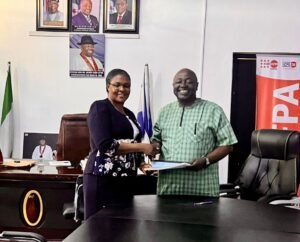
    Ayuk commended the initiative, stressing that research findings were essential to developing more effective and targeted public health interventions.

    Ayuk said the priority should extend beyond identifying primary cases to understanding how infections are sustained and transmitted from one community to another, particularly given the social and transportation links connecting rural settlements.

    “The most critical priority is focusing on secondary infections rather than just primary cases, and examining whether current intervention methods are serving their intended purpose.”

    He noted that the strong social and transit interactions between inland communities could facilitate the rapid spread of outbreaks, making early detection, surveillance and targeted community interventions critical to containing disease transmission.

    “I want to thank the team for this vital research. I am deeply interested in this development,” the Commissioner added.

    Ayuk subsequently called for sustained grassroots mobilisation and greater integration of local dialects into public health campaigns, stressing that communicating health messages in languages understood by local communities would strengthen community ownership and promote lasting behavioural change.

    The Commissioner also emphasised the importance of continued collaboration between government and academic institutions in translating research evidence into practical interventions capable of protecting rural communities from seasonal waterborne diseases.


     

  • Homeland Security Seeks Stronger Police Partnership to Tackle Crime in Cross River

    Homeland Security Seeks Stronger Police Partnership to Tackle Crime in Cross River

    By BANNERNEWS Reporter, Calabar
    The Homeland Security, Cross River State South, has called for stronger collaboration with the Nigeria Police Force to tackle rising security challenges and improve public safety across the state.
    The Director-General of the organisation, Chief Michael Nsan, made the call when he led a delegation on a courtesy visit to the Commissioner of Police, Cross River State Command, CP Ajo Geoffrey Ordue, on Wednesday.
    Nsan said closer cooperation between Homeland Security and the police would enhance the sharing of intelligence and information needed to prevent and disrupt criminal activities in the state.
    Receiving the delegation, CP Ajo Geoffrey described Homeland Security as a critical stakeholder in the state’s security architecture, saying the increasing sophistication of criminal activities required greater cooperation among security stakeholders.
    The commissioner stressed the need for intelligence sharing, community engagement and coordinated operational support to enable security agencies to respond more effectively to emerging threats.
    He said the command was ready to deepen its partnership with Homeland Security and other stakeholders to strengthen public safety and protect lives and property.
    Nsan, who appreciated the commissioner for receiving his delegation, reaffirmed Homeland Security’s readiness to work closely with the police in addressing security challenges across Cross River.
    The meeting ended with a commitment by both organisations to strengthen intelligence-led operations and build a more coordinated security network across the state.

  • Archbishop Bassey Backs Otu For Second Term, Says Cross River Has Moved Forward

    Archbishop Bassey Backs Otu For Second Term, Says Cross River Has Moved Forward

    By BANNERNEWS Reporter, Calabar

    The Territorial Archbishop of Calabar and Founding Patriarch of the Cross River State Christian Leaders Forum, Archbishop Josef Bassey, has endorsed Governor Bassey Edet Otu for a second term, declaring that the governor’s performance in his first three years has been “extraordinary.”

    Bassey made the declaration during a world press conference in Calabar, where he assessed the condition of the state when Otu assumed office in May 2023 and the administration’s performance since then.

    According to him, the state inherited by the Otu administration was in a deep crisis, with domestic debt standing at about N204 billion, accumulated pension gratuities, dilapidated public infrastructure, poor road networks and security challenges.

    He said the government had, within three years, reduced domestic debt by about N72 billion to approximately N132 billion, increased internally generated revenue and worked on more than 608 kilometres of roads across the state.

    The Archbishop also cited the return of regular flights to Calabar, the upgrading of 196 Primary Healthcare Centres and the revitalisation of another 96 centres, as well as the payment of pension gratuities up to 2015, as evidence of progress under the administration.

    Bassey said one of the major achievements of the government was the recovery and rehabilitation of public assets, including the Governor’s Office, State Library, Cultural Centre, Cross River Broadcasting Corporation, Nigerian Chronicle complex and government lodges. He also noted the recovery of Tinapa Resort.

    He described the efforts as “the courage and patriotism of recovery,” arguing that governments should not only focus on constructing new projects but must also preserve and restore public assets inherited from previous administrations.

    On security, the cleric said Cross River had moved from a period when kidnapping, cult violence and fear were widespread to a situation where residents could move and conduct their businesses with greater confidence.

    However, Bassey criticised some members of the Otu administration, saying some political appointees lacked the competence required for their positions. He urged the governor to make competence, character, capacity and performance the basis for appointments in the next phase of the administration.

    He also challenged the government to move beyond counting projects and programmes to measuring their actual impact, particularly in areas such as youth employment, Tinapa, the proposed Bakassi Deep Seaport, agriculture, tourism and industrial development.

    Bassey said the first three years of the Otu administration should be regarded as a period of rescue, recovery and repositioning, while the next phase should focus on production, investment, job creation and wealth generation. Declaring that “we have spent three years buying back our past,” he urged the government to now focus on building the future.

    The Archbishop said his support for Otu was based on an assessment of evidence rather than partisan considerations. “My standard has not changed; the evidence has,” he stated, adding that Otu had “earned a second term.”

    He argued that continuity was necessary to consolidate the gains already made, stressing that Cross River should not return to the situation where successive administrations spend years rebuilding neglected public assets.

    Bassey further called for the protection of the state’s future through competent leadership, strong institutions, justice and accountability, while urging Cross Riverians to put the interest of the state above partisan considerations.

    “Not for Otu. Not for APC. For Cross River,” he said, warning that the state should not “gamble with Government House” at a critical stage of its recovery.