Category: Health

  • NARD Rejects Six-Month Jail Term For Doctors, Threatens Nationwide Strike

    NARD Rejects Six-Month Jail Term For Doctors, Threatens Nationwide Strike

    By BANNERNEWS Reporter, Calabar

    The Nigerian Association of Resident Doctors (NARD) has rejected proposed legislation seeking to impose a six-month jail term or a fine of up to N300,000 on doctors and other healthcare professionals over delays in emergency medical treatment.

    The association warned that it could consider nationwide industrial action if the National Assembly proceeds with the proposed punitive provisions, insisting that medical practitioners should not be held criminally responsible for failures caused by years of neglect of the healthcare system.

    The proposed amendment to the National Health Act, which has reportedly passed second reading in the Senate, seeks to establish mandatory timelines for emergency treatment and referral, with penalties for healthcare professionals and facilities that fail to comply.

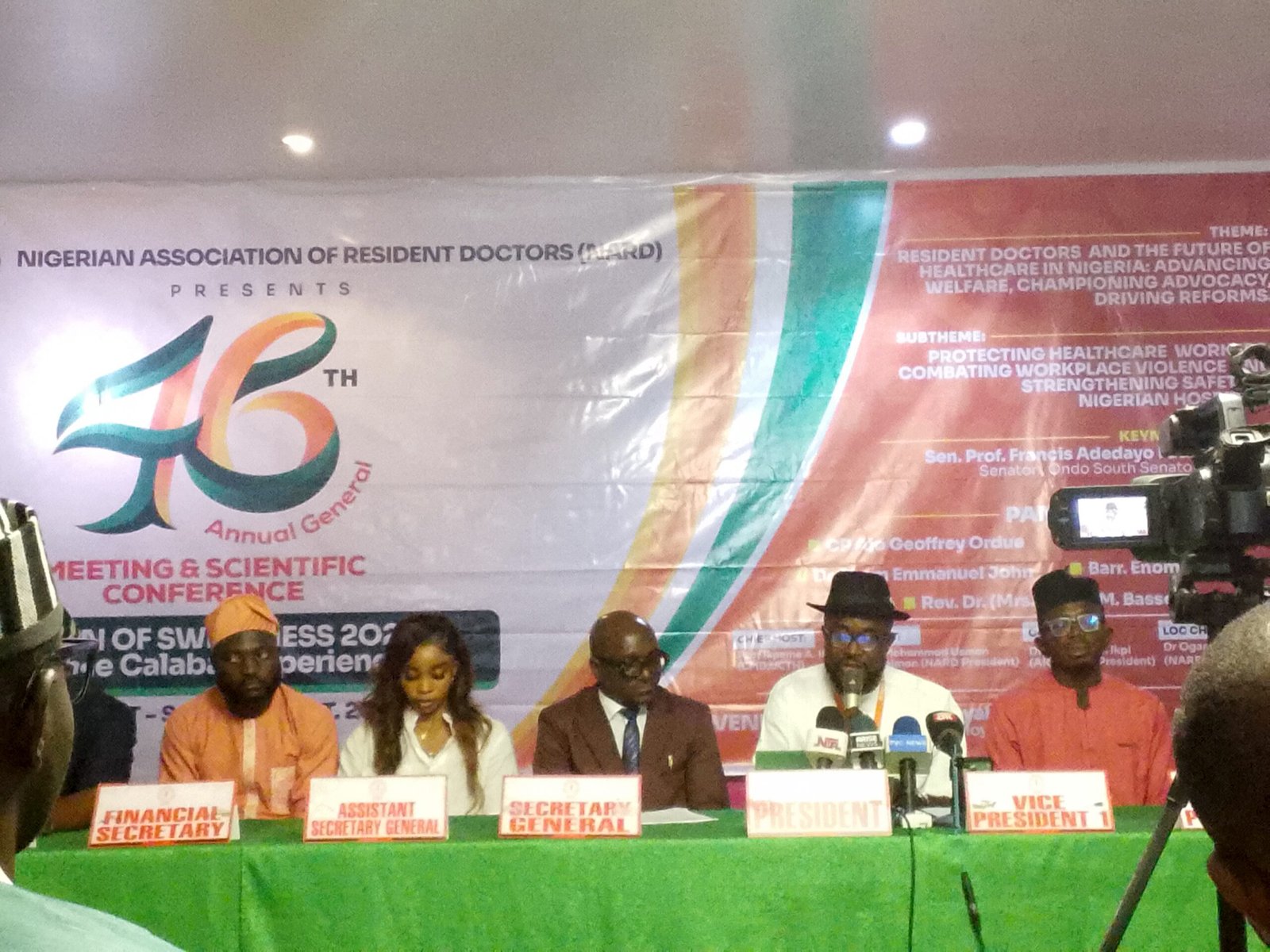
    In a statement signed by its President, Dr Ogar Emmanuel Idoko; Secretary-General, Dr Besongngem Akotanchi; and Publicity and Social Secretary, Dr Ashimom Timothy, NARD acknowledged the importance of prompt emergency care but faulted the decision to introduce criminal sanctions without first addressing the conditions in which doctors work.

    The association identified inadequate medical equipment, insufficient personnel, unreliable electricity, shortages of emergency supplies and deteriorating hospital infrastructure as major constraints confronting healthcare workers across the country.

    It argued that doctors should not be punished for institutional failures beyond their control, particularly when government hospitals lack the basic facilities required to provide timely emergency care.

    NARD also questioned the priorities of lawmakers, noting that Nigeria had yet to meet the 15 per cent health-sector funding commitment under the Abuja Declaration, despite the urgent need to strengthen public hospitals.

    It challenged the National Assembly to channel similar legislative urgency towards ensuring adequate funding, functional emergency departments, modern diagnostic equipment, reliable ambulance services and sufficient healthcare personnel.

    The association further warned that imposing additional criminal penalties on already overstretched medical professionals could worsen the country’s brain drain, as more doctors and other health workers might seek opportunities abroad.

    NARD called for the withdrawal and fundamental reconsideration of the proposed punitive provisions, urging lawmakers to consult medical associations, hospital administrators, patient representatives and other relevant stakeholders.

    It also demanded explicit legal safeguards to ensure that doctors are not prosecuted for delays arising from unavailable equipment, inadequate staffing or other circumstances beyond their reasonable control.

    The association challenged political officeholders to demonstrate confidence in the country’s public healthcare system by using government hospitals for their medical needs, instead of relying on overseas medical treatment.

    It maintained that meaningful reform should focus on adequate funding, improved hospital infrastructure, staffing and institutional accountability rather than criminalising frontline medical workers.

    NARD warned that if the National Assembly enacted legislation that unjustly punished doctors for systemic failures, it would convene its appropriate decision-making organs to consider all lawful options, including nationwide industrial action, while making arrangements to protect emergency and critically ill patients.

  • Cross River Denies Ebola Outbreak

    Cross River Denies Ebola Outbreak

    By BANNERNEWS Reporter, Calabar

    The Cross River State Government has denied reports of an Ebola outbreak in the state, assuring residents that no case has been recorded.

    The state epidemiologist in the Ministry of Health, Mrs Inyang Ekpenyong, gave the clarification in an interview with our reporter in Calabar.

    “There is no case of Ebola disease in any part of the state. The only reported case is in Abuja,” she said.

    Ekpenyong said the government had put measures in place to prevent the disease from spreading into Cross River State, although she did not specify the steps taken.

    “The government has been proactive in this regard. We have already put a lot of measures in place to avert its outbreak in the state,” she added.

  • Ministers Warn Nigerians Against Antibiotic Misuse

    Ministers Warn Nigerians Against Antibiotic Misuse

    BANNERNEWS Reporter, Calabar

    Nigerian ministers have warned against the indiscriminate use of antibiotics, urging citizens, healthcare workers and livestock farmers to adopt responsible practices to curb antimicrobial resistance (AMR).

    The ministers said misuse of antibiotics, including taking incorrect doses, failing to complete prescribed treatment and using the drugs without medical advice, could worsen resistance and undermine their effectiveness.

    They spoke during a hybrid interactive session with journalists in Abuja, with participants joining both physically and online, ahead of a global conference on antimicrobial resistance scheduled to hold in Nigeria from December 6 to 8.

    The Coordinating Minister of Health and Social Welfare, Prof. Muhammad Ali Pate, urged Nigerians not to use antibiotics for every cough or catarrh, advising them to consult qualified medical practitioners before taking the drugs.

    Pate also stressed the importance of following prescribed treatment and taking antibiotics for the recommended duration, even when symptoms had subsided.

    He said Nigeria had been building its capacity to address antimicrobial resistance through a national action plan, research and collaboration among experts in academic and public health institutions.

    The minister explained that antimicrobial resistance required a coordinated response involving several sectors, including human health, animal health, agriculture and the environment.

    He added that the government was strengthening drug regulation to improve access to quality medicines and tackle counterfeit and substandard products.

    Pate cited efforts to regulate drug distribution, including the establishment of coordinated wholesale centres and measures by the National Agency for Food and Drug Administration and Control (NAFDAC) and the Pharmacists Council of Nigeria to improve the quality and safety of medicines.

    The Minister of Environment, Balarabe Abbas Lawal, described environmental hygiene as an important component of disease prevention, urging Nigerians to keep their surroundings clean to reduce infections and the need for antibiotics.

    Lawal said preventing diseases through improved sanitation and environmental cleanliness would help reduce the demand for antimicrobial medicines.

    The Minister of Livestock Development, Idi Mukhtar Maina, called for responsible antibiotic use among poultry and other livestock farmers, warning that indiscriminate administration of the drugs could pose risks to human health.

    He urged farmers to prioritise vaccination, proper feeding, hygiene and biosecurity measures rather than routinely using antibiotics to promote animal growth.

    Maina further advised farmers to administer antibiotics only when necessary and under appropriate prescription, while observing the required withdrawal periods before animals and their products were released for human consumption.

    He said the ministry was working through extension agents to educate farmers on responsible antibiotic use and the dangers associated with improper practices.

    The Minister of Agriculture and Food Security, Senator Abubakar Kyari, was also among the ministers participating in the engagement, which highlighted the need for coordinated action across government sectors to tackle antimicrobial resistance.

    The ministers also underscored the need to communicate the dangers of antimicrobial resistance through relatable stories and local languages to improve public understanding and encourage behavioural change.

    They said the forthcoming conference would provide an opportunity for participating countries to discuss practical policy measures to combat antimicrobial resistance while ensuring that people who genuinely need antibiotics can still access them.

    The ministers called on the media to intensify public awareness of antimicrobial resistance and the importance of disease prevention, responsible medicine use and cooperation across sectors.

  • NARD Urges IPPIS to Pay House Officers’ Salaries Promptly

    NARD Urges IPPIS to Pay House Officers’ Salaries Promptly

    By BANNERNEWS Reporter, Calabar

    The National Association of Resident Doctors (NARD) has urged the Medical and Dental Council of Nigeria (MDCN) and the Integrated Personnel and Payroll Information System (IPPIS) to ensure the timely processing and payment of salaries owed House Officers.

    The association made the call in a 19-point communique issued after its Annual General Meeting (AGM) in Calabar, where a new executive committee led by Dr Ogar Emmanuel Idoko was elected.

    The communique was signed by Idoko, President; Dr Besongngem Akotanchi, Secretary-General; and Dr Ashimom Timothy, Publicity and Social Secretary.

    NARD also called on MDCN and IPPIS to immediately settle outstanding salary arrears owed affected doctors, warning that continued delays could trigger further industrial disputes.

    The AGM condemned the persistent downgrading by MDCN of membership certificates issued by the West African College of Surgeons (WACS) and West African College of Physicians (WACP), and demanded an immediate reversal of the policy.

    According to the association, the issue has persisted since 2020 without a satisfactory resolution.

    It also demanded the immediate resolution of the non-issuance of Part I certificates by the National Postgraduate Medical College of Nigeria (NPMCN).

    NARD called on the Federal Ministry of Health and Social Welfare to urgently intervene and ensure a definitive resolution of both certification issues.

    The association further demanded an immediate resolution of the ongoing industrial crisis at LAUTECH Teaching Hospital, Ogbomoso, and urged Oyo State Governor, Seyi Makinde, to intervene in the dispute, resolve outstanding issues and restore a stable working environment at the institution.

    Expressing concern over the continued brain drain in the medical sector, NARD urged the Federal Government to establish a sustainable and seamless mechanism for the recruitment and employment of doctors to address critical manpower shortages.

    The association gave the government a two-week ultimatum, effective October 1, 2026, to address its 19-point demands.


  • Poor Handling Of Corpses Could Trigger Health Risks, C’River Govt Warns Morticians

    Poor Handling Of Corpses Could Trigger Health Risks, C’River Govt Warns Morticians

    By BANNERNEWS Reporter, Calabar

    The Cross River State Government has warned morticians and managers of government-owned mortuaries against poor handling of corpses, saying negligence could expose workers, relatives and members of the public to avoidable health and environmental risks.

    The State Commissioner for Health, Elder Dr Henry Egbe Ayuk, gave the warning on Tuesday during a stakeholder meeting with managers of government-owned mortuaries and health facilities in Calabar.

    Ayuk stressed the need for higher professional standards in the management of mortuaries, saying corpses must be properly handled and preserved from the point of admission until their release for burial.

    “We want to appreciate you for what we are working together to achieve: quality healthcare. You know the dead have to be taken care of very well, not only the people who are alive. Even the dead, the corpse, if we are not taking good care of it, we also are running a risk,” he said.

    The commissioner said the state government was committed to improving healthcare delivery by strengthening supervision and ensuring compliance with established health, safety and administrative standards.

    He urged mortuary managers to ensure that their operations complied with approved procedures, noting that lapses in the handling and preservation of corpses could create avoidable risks.

    Ayuk also directed managers to submit updated administrative reports and records on the operational status of their facilities to strengthen monitoring, accountability and oversight of mortuary services across the state.

    The Director of Medical and Dental Services in the Ministry of Health, Dr Stephen Agbor, also called on managers to comply with the terms governing the use and management of government-owned facilities.

    Agbor expressed concern over the failure of some operators to remit agreed revenues to the state government, warning that government could withdraw the Memoranda of Understanding of operators who failed to meet their contractual obligations.

    “It is incumbent on us to know that most of these are contracts. The government has the right to withdraw all the MoUs when you are failing in your part.

    “You have to pay those remittances, no matter how small, to government. But many people are not doing it, and it has become worrisome,” he said.

    He urged managers to take their contractual responsibilities seriously, particularly the regular remittance of agreed revenues, stressing that compliance remained a condition for continued operation.

    The meeting reviewed administrative and operational reports from government health facilities and mortuaries in Ogoja, Ugep, Calabar, Akamkpa and Ikom.

    The session was attended by the ministry’s Procurement Officer, Mrs Ajie Achu, and other stakeholders who reviewed operational challenges and measures to improve compliance, accountability and professional standards in the management of mortuary services across the state.

  • Catholic Church Not Owners Of Ogoja College Of Nursing Sciences — C’River Govt Insists

    Catholic Church Not Owners Of Ogoja College Of Nursing Sciences — C’River Govt Insists

    By BANNERNEWS Reporter, Calabar

    The Cross River State Government has insisted that the Catholic Church does not own the College of Nursing Sciences, Ogoja, reaffirming that the institution is wholly owned and controlled by the state.

    The government’s position comes amid an emerging dispute over the ownership and administration of the college, with the Catholic Diocese reportedly expressing an intention to take control of the institution.

    The Commissioner for Health, Dr Henry Egbe Ayuk, restated the government’s position on Tuesday when he received members of the college’s Governing Council at the Ministry of Health headquarters in Calabar.

    Ayuk said the college remained a state-owned institution and could only operate under the formal recognition and approval of the government.

    “That school is owned totally by the government,” the commissioner said.

    He added that while the government was open to private-sector participation in its investments, such participation could not override the state’s ownership, regulatory and administrative authority.

    The renewed declaration is coming against the backdrop of earlier insistence by traditional leaders in Ogoja that the nursing institution belongs to the Cross River State Government and not the Catholic Church.

    The Governing Council Chairman, Dr Teresa A. Osaji, said the council sought clarification from the ministry after receiving correspondence from the Catholic Diocese indicating an intention to assume control of the institution.

    “We decided to come and see the Commissioner because of the issue bothering us in the college regarding correspondence from the Catholic Diocese expressing an intent to assume control of the institution,” Osaji said.

    She said the council, being responsible for the administration of the institution, considered it necessary to establish its status with the state government and obtain direction on the way forward.

    The meeting was attended by the college’s Provost, Dr Fuyiko Oking; Cross River State Chairman of the National Association of Nigerian Nurses and Midwives, Mrs Josephine Bassey; and council members, Prof Idang N. Idang, Dr Rex U. Obo and Simon Eje Bisong.

  • NARD AGM: Odey Reaffirms Otu Administration’s Commitment To Healthcare

    NARD AGM: Odey Reaffirms Otu Administration’s Commitment To Healthcare

    By BANNERNEWS Reporter, Calabar

    Cross River State Deputy Governor, Peter Odey, has reaffirmed the state government’s commitment to improving healthcare delivery and the welfare of medical professionals.

    Odey spoke on Tuesday when he received a delegation of the Nigerian Association of Resident Doctors (NARD), led by its outgoing National President, Dr Mohammad Usman Suleiman, at the Government House in Calabar.

    He said the administration of Governor Bassey Otu would continue to strengthen healthcare institutions, improve conditions of service and create a conducive environment for medical professionals to practise in the state.

    According to him, the government was also taking measures to address factors contributing to the migration of doctors and other health professionals from the state.

    Odey said Cross River remained committed to retaining skilled medical personnel while improving access to healthcare for residents.

    He thanked NARD for choosing Calabar to host its 46th Annual General Meeting, saying the gathering would provide an opportunity for professional exchange and discussions on healthcare delivery in Nigeria.

    Earlier, Suleiman commended the state government for what he described as improvements in the welfare of health workers and interventions in the healthcare sector.

    He cited the reported 100 per cent implementation of the Consolidated Medical Salary Structure (CONMESS), upgrading of Primary Healthcare Centres and strengthening of the State Hospital Management Board.

    Suleiman also mentioned the enactment of the Medical Quackery Prohibition Law, establishment of the Drug Management Agency, extension of the retirement age for health workers to 65 and the lifting of the employment embargo, including recruitment of medical specialists.

    He said the measures had implications for the availability and retention of healthcare personnel in the state.

    Suleiman disclosed that the delegation’s visit was part of activities ahead of NARD’s 46th Annual General Meeting and the inauguration of its incoming national president, Dr Ogar Emmanuel Idoko.

    The opening ceremony is scheduled for Thursday in Calabar, while Idoko and members of his executive are expected to be inaugurated on Friday.

  • Billionaires Hold 12km Walkathon In Calabar To Promote Unity

    Billionaires Hold 12km Walkathon In Calabar To Promote Unity

    By BANNERNEWS Reporter, Calabar

    About 500 residents, fitness enthusiasts, corporate organisations and government officials on Saturday participated in a 12-kilometre walkathon in Calabar to promote unity and healthy living.

    The event, organised by the Healthy Billionaires Fitness Club Calabar, was the seventh edition of the annual Calabar Walkathon.

    Participants converged at Millennium Park, Calabar, for the exercise themed, “Walk for Unity and Sustainable Development.”

    Chairman of the planning committee, Samuel Usoro, said the initiative was aimed at combining physical fitness with advocacy for sustainable development.

    Usoro urged Nigerians not to allow religious, ethnic and political differences to undermine their common interests.

    “We are one. We all believe the same. We all feel the same way. Let us come together and ask for sustainable development from whoever is responsible—the public sector, the private sector and ourselves individually,” he said.

    He also encouraged residents to make regular physical activity part of their lifestyle, noting that walking remained one of the simplest forms of exercise.

    Speaking at the flag-off, the Secretary to the Cross River State Government, Prof. Anthony Owan-Enoh, called for greater unity among citizens to sustain development in the state.

    Owan-Enoh said sustainable development required the collective efforts of government, the private sector and citizens.

    Assistant Secretary of the club, Hope Obeten, said the annual walkathon began in 2020 during the COVID-19 pandemic to promote healthy living and bring residents together around social causes.

    He said the choice of unity as this year’s theme was informed by the need to encourage peaceful coexistence as the country approaches another election cycle.

    “No matter the divide, no matter the political parties that we are, nothing will be as strong as unity going into an election year,” Obeten said.

    He added that the club had undertaken medical outreaches, paid medical bills for indigent patients and visited vulnerable families as part of its activities.

    Obeten urged Nigerians to maintain peace before, during and after elections, stressing that political differences should not lead to violence.

  • 200,000 Condoms Distributed in Calabar In Six Months – AHF

    200,000 Condoms Distributed in Calabar In Six Months – AHF

    By BANNERNEWS Reporter, Calabar

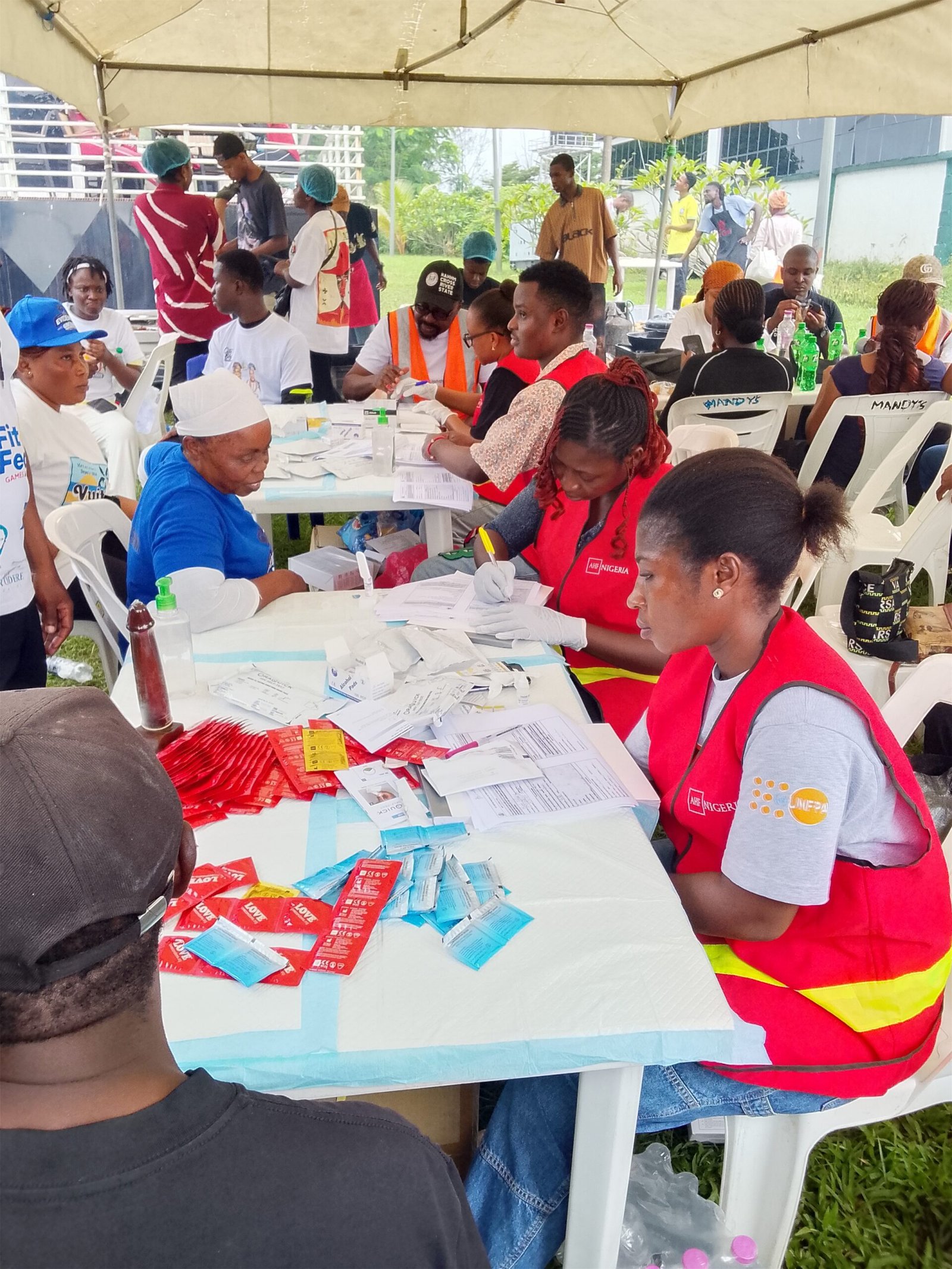
    The AIDS Healthcare Foundation (AHF) has distributed more than 200,000 condoms in Cross River State in the past six months, mostly in Calabar, saying the demand is very high.

    AHF’s HIV/AIDS Prevention Coordinator, Aruk Ene, disclosed this on Saturday during a Walkathon organised by the Healthy Billionaires Club in Calabar to promote healthy living.

    Ene said demand for condoms remained high, contrary to the belief that their use was declining.

    She said the foundation distributed more than 50,000 condoms within a few hours on February 13, a day before Valentine’s Day.

    “We distributed over 50,000 within hours and conducted tests for several persons,” she said.

    Ene said AHF also planned to distribute 10,000 condoms during Saturday’s event, adding that people continued to request the products whenever they were made available.

    “I won’t agree that the use of condoms has reduced. People have their reasons, and this is why we embark on constant education on their use,” she said.

    She also advised people to use appropriate condom sizes, noting that discomfort from using the wrong size could discourage some people from using them.

    On HIV testing, Ene encouraged residents to regularly check their status, saying those who test positive could be linked to treatment and laboratory monitoring with their consent.

    “If you are positive, with your permission, we proceed with treatment and laboratory monitoring. If you are negative, we also advise and provide the necessary preventive drugs,” she said.

    She said AHF could not immediately provide the number of people tested during the Walkathon.

    Ene also noted that Cross River’s location, which attracts people from neighbouring states and Cameroon, results in the movement of people with different health conditions into the state.

    However, she said the foundation could not determine which sexually transmitted infection among HIV, hepatitis and syphilis was most prevalent in the state.

    She added that HIV prevention had evolved, with oral and injectable preventive drugs now available.

  • Seven Riverine Communities at High Risk of Cholera Outbreak – University Research

    Seven Riverine Communities at High Risk of Cholera Outbreak – University Research

    By BANNERNEWS Reporter, Calabar

    Investigations by University of Calabar researchers have revealed that there are seven riverine communities in Etung local government area of Cross River State are prone to high risk of cholera pandemic.

    This was laid bare yesterday when the research team visited the commissioner for health in the state, Dr Henry Egbe Ayuk to debrief him about their findings, causes and possible solutions.

    Speaking on behalf of the research team, the Principal Investigator, Dr. Glory Nja, presented the study, which focused on seasonal cholera outbreaks across the seven high-risk riverine communities in Southern Etung LGA.

    The research project, funded by the Royal Society of Tropical Medicine and Hygiene (RSTMH) and the National Institute for Health and Care Research (NIHR), deployed a community-based approach involving the use of the Ejagham dialect, targeted community engagement and water, sanitation and hygiene (WASH) interventions.

    Nja explained that unsafe water, poor sanitation, inadequate handwashing and open defecation remained significant factors contributing to the persistence and spread of cholera in affected communities.

    She said residents could significantly reduce their risk of infection through practical preventive measures, including boiling or properly treating drinking water, keeping their surroundings clean, practising proper hand hygiene and eliminating open defecation.

    According to her, communities should not wait for disease outbreaks to escalate before taking preventive action, stressing that sustained health education and behavioural change were critical to reducing the burden of cholera.

    She urged residents to adopt simple but effective preventive practices, noting that proper water treatment, environmental cleanliness, handwashing and the abandonment of open defecation could go a long way in preventing cholera transmission across the affected communities.

    Reviewing the findings, the commissioner said the state government is ready to strengthen its commitment to research-driven healthcare interventions.

    Ayuk called for greater attention to secondary infections and inter-community transmission in the fight against cholera.

    Ayuk commended the initiative, stressing that research findings were essential to developing more effective and targeted public health interventions.

    Ayuk said the priority should extend beyond identifying primary cases to understanding how infections are sustained and transmitted from one community to another, particularly given the social and transportation links connecting rural settlements.

    “The most critical priority is focusing on secondary infections rather than just primary cases, and examining whether current intervention methods are serving their intended purpose.”

    He noted that the strong social and transit interactions between inland communities could facilitate the rapid spread of outbreaks, making early detection, surveillance and targeted community interventions critical to containing disease transmission.

    “I want to thank the team for this vital research. I am deeply interested in this development,” the Commissioner added.

    Ayuk subsequently called for sustained grassroots mobilisation and greater integration of local dialects into public health campaigns, stressing that communicating health messages in languages understood by local communities would strengthen community ownership and promote lasting behavioural change.

    The Commissioner also emphasised the importance of continued collaboration between government and academic institutions in translating research evidence into practical interventions capable of protecting rural communities from seasonal waterborne diseases.