Category: News

  • Presbyterian Church Shuts Road Over Alleged Breach of Agreement by Cross River Govt

    Presbyterian Church Shuts Road Over Alleged Breach of Agreement by Cross River Govt

    By BANNERNEWS Reporter, Calabar 

    The Presbyterian Church of Nigeria (PCN) has blocked an access road forcibly opened by the Cross River State Government through its premises in Calabar, citing the government’s failure to sign a Memorandum of Understanding (MoU) with the church.

    The road, which passes through the premises of Hope Waddell Training Institution, one of the oldest secondary schools in southern Nigeria, provides access to the shoreline and Anansa community in Calabar Municipality.

    The church reportedly closed the road a few days ago after accusing the state government of failing to fulfil its commitment to formalise an agreement on the temporary use of its property.

    The state government had approached the church following a devastating landslide that affected Anansa Road, seeking permission to open an alternative route to enable residents and members of the public to continue their economic activities in the area.

    The PCN reportedly agreed to the request in the interest of the public, expecting the government to formalise the arrangement through an MoU specifying the terms and conditions of the temporary access.

    However, a church official, who spoke on condition of anonymity, alleged that the government opened the road barely two days after discussions, without obtaining the church’s formal approval or signing any agreement.

    “While the church was waiting for the documentation, it was surprising that the state government, two days after the discussion, without any approval or written agreement, opened up the road.

    “Yet, we kept calling on the government for the MoU to be signed, but the government never showed up despite several meetings agreed upon,” the official said.

    The official further alleged that the church’s goodwill had been abused, citing what he described as the demolition of its Synod Office and other inconveniences arising from the government’s actions.

    He said the Synod Moderator subsequently directed the immediate closure of the road after efforts to secure a formal agreement proved unsuccessful.

    “In view of the abuse of the church’s magnanimity and arrogant treatment from the representative of the state government, and whereas we have exhausted all efforts to cause them to enter into an agreement with us, the Synod Moderator has ordered the immediate closure of the said road until the agreement is formally signed and agreed conditions met,” he said.

    Confirming the development, the PCN Office Manager in Calabar, Rev. Anam Bassey, said the church had erected a perimeter fence across the access road and blocked another passage to prevent further access.

    Reacting, the Cross River State Commissioner for Information and Orientation, Pastor Ekpenyong Cobham, said he was not aware of the latest development but expressed confidence that the matter could be resolved.

    “I am not even aware of this issue, maybe it is due to those handling the matter. I am sure the Prelate has direct access to the Governor, and the church could leverage on that to sort things out.

    “The governor, who is my boss, is not an unreasonable person. He has a lot of regard for the body of Christ,” Cobham said.

  • Cross River Disburses Over N900m To Vulnerable Residents In Five Months

    Cross River Disburses Over N900m To Vulnerable Residents In Five Months

    By BANNERNEWS Reporter, Calabar

    Cross River State Government has disbursed more than N900 million to vulnerable residents under its Social Investment Programme within the last five months.

    The programme’s State Coordinator, Dr Edem Okokon Effiong, has disclosed during a press conference.

    He explained that the intervention was initiated by the administration of Governor Bassey Otu and was separate from the Federal Government’s social investment schemes.

    He said beneficiaries had started receiving N50,000 each under the conditional cash transfer component of the programme, while another category of beneficiaries would receive start-up funds to support small businesses.

    According to him, the programme targets vulnerable persons across the state’s 196 wards, with an initial plan to identify 100 beneficiaries per ward for the cash transfer component and another 50 for the business start-up intervention.

    He explained that the beneficiaries were identified through different social groups, including churches, traditional institutions, women’s organisations and youth groups, to ensure wider coverage and inclusiveness.

    Effiong said the selection process involved asking the various groups to identify their most vulnerable members, adding that the programme was designed to reach people facing genuine economic difficulties.

    He disclosed that some beneficiaries had encountered delays in receiving payments due to issues relating to bank account details, Bank Verification Numbers and other verification challenges, but said efforts were ongoing to resolve them.

    The coordinator also warned residents against a fraudulent online offer allegedly linked to OPay, which he said had been confused with the state government’s intervention, clarifying that the N50,000 payments were being made by the Cross River Government.

    Addressing concerns about the timing and sustainability of the programme, Effiong said there was no wrong time to provide support to vulnerable citizens, urging the media and residents to monitor its implementation and demand accountability to prevent abuse and ensure continuity.

    He described the initiative as an investment in the people rather than charity, expressing optimism that the state government would sustain and expand it despite prevailing economic challenges.

  • Otu Invests In Security Infrastructure, Upgrades Police Facilities In Cross River

    Otu Invests In Security Infrastructure, Upgrades Police Facilities In Cross River


    By BANNERNEWS Reporter, Calabar

    Cross River State Governor, Senator Bassey Otu, says his administration is investing in security infrastructure, operational equipment and improved facilities for security agencies as part of efforts to strengthen the state’s security architecture.

    Otu disclosed this on Friday while inspecting a newly constructed police station on Bateba Street, Calabar, where he reaffirmed his government’s commitment to protecting lives and property.

    He said the investments covered maritime security infrastructure, modern security equipment and land-based security arrangements aimed at improving surveillance and tackling criminal activities.

    “Security has been one of our very prime concerns in this state. And this state remains the safest state nationally in this country,” the governor said.

    Otu noted that Cross River’s extensive land and maritime boundaries with neighbouring countries presented security challenges requiring sustained investment and cooperation among security agencies.

    He warned that his administration would not tolerate lawlessness, stressing that anyone found violating the law would face the consequences.

    The governor also attributed residents’ growing confidence in public safety to the improved security situation, citing the increasing number of people engaging in early morning activities without fear.

    He recalled a recent walk around 5am when he observed residents freely going about their businesses, describing it as an indication of improved public confidence.

    Otu said maintaining a peaceful environment was necessary to encourage investment and tourism, pledging to sustain government support for security agencies.

    In a related development, the governor inspected the state-owned Cross River Broadcasting Corporation (CRBC), where he promised to upgrade its transmission substations to expand broadcast coverage across the state.

  • OPINION    Imperative Of Owning Our Narratives, Documenting Our Achievements And Preserving Our Legacy

    OPINION Imperative Of Owning Our Narratives, Documenting Our Achievements And Preserving Our Legacy

    By Omini Oden

    “Unless you write your story, another person will take your glory”

    There is a profound truth in the saying that unless you write your story, another person will take your glory. It is a strong reminder that achievements do not always speak for themselves, contributions are not automatically recognized and history does not necessarily remember people in the order in which they made their impact. Nigeria in Africa has some of the most strategic legacies but our silence has made those legacies go extinct.

    In a world increasingly driven by information, perception and public narratives, the ability to tell one’s story is now as important as the achievement itself. Those who fail to document their contributions, communicate their accomplishments and preserve their institutional history have ended up surrendering the opportunity to define how they will be remembered.

    Unfortunately, this happens frequently in our society. People work tirelessly to build institutions, develop communities, establish businesses, initiate policies and create opportunities, only to watch others eventually assume ownership of the achievements. Sometimes, the appropriation is deliberate. At other times, it happens because the original contributors failed to document their work or communicate their involvement.

    Consider the history of nation-building. Many individuals who made significant contributions to Nigeria’s political, economic, educational and institutional development are barely remembered beyond their immediate circles. Some of their contributions have been overshadowed by the more visible personalities who came later and effectively controlled the public narrative.

    The same phenomenon is evident in public administration. A civil servant may spend years developing an innovative policy framework, designing an operational system or establishing an institutional process. However, when the initiative eventually produces results, the recognition may go to the political office holder or administrator who announces its success. While leadership deserves its rightful recognition, the contributions of those who conceived, designed and implemented the initiative should not disappear from institutional memory.

    This is why documentation matters. Official records, reports, publications, photographs, correspondence and properly maintained archives are not only administrative requirements. They are instruments for preserving institutional ownership and historical accountability.

    The media offers another compelling example. Behind every successful television programme, major news production or national broadcast are journalists, producers, editors, camera operators, technical personnel and administrators whose collective efforts make the final product possible. Yet, public recognition often gravitates towards the presenter or the most visible personality.

    This is not necessarily wrong but it becomes problematic when the contributions of the wider production team are consistently ignored. Every institution must consciously cultivate a culture of documentation and acknowledgement to ensure that the people who make things happen are not erased from the stories of institutional success.

    In the corporate world, companies that fail to communicate their innovations, intellectual contributions and competitive advantages risk allowing competitors to dominate the market narrative. A business may develop an excellent product or service, but if it fails to tell its story effectively, a competitor with a stronger communication strategy may capture the attention, credibility and market share that should have belonged to the original innovator.

    The lesson is clear, excellence must be accompanied by visibility, while achievement must be supported by credible documentation.

    At the community level, the implications are equally significant. Many communities have rich histories, cultural institutions, development initiatives and remarkable personalities whose contributions deserve recognition. Yet, because there are inadequate archives, publications and historical records, younger generations grow up without knowing the people who laid the foundations for their present opportunities.

    When communities fail to preserve their histories, they create room for distortions, competing claims and the gradual disappearance of their heritage. A community that does not document its past risks losing the institutional memory required to guide its future.

    However, writing one’s story should not be confused with self-promotion, propaganda or the deliberate exaggeration of personal achievements. It is about establishing an accurate record of contributions, preserving facts and ensuring that the truth is available for present and future generations.

    There is also an important distinction between telling one’s story and imposing one’s narrative on others. Responsible storytelling must be anchored on facts, verifiable evidence and intellectual honesty. It must recognize collective efforts and give credit where it is due.

    For professionals, this means maintaining records of major assignments, projects, publications, innovations and measurable accomplishments. For public institutions, it means investing in functional archives, annual reports, institutional histories and effective communication systems. For governments, it means documenting policies, implementation processes and measurable outcomes rather than allowing public communication to revolve exclusively around personalities.

    For nations, it means taking ownership of their historical narratives. A country that does not tell its own story leaves others to interpret its history, sometimes through perspectives that may not adequately reflect its experiences, sacrifices, achievements and aspirations.

    Nigeria, for instance, has remarkable stories of resilience, innovation, intellectual accomplishment, cultural influence and entrepreneurial excellence. These stories deserve systematic documentation and strategic communication at home and internationally. We cannot consistently complain about negative international perceptions while neglecting the responsibility of projecting our achievements and communicating our national identity.

    In the final analysis, writing your story is an act of responsibility. It is about preserving your place in history, establishing the truth about your contributions and ensuring that future generations have access to an accurate account of what happened.

    It is equally important to understand that the story must be written while the evidence is still available, the memories are fresh and the people who witnessed the events can still provide their accounts. Waiting until retirement, controversy or death to establish a record of one’s contributions may be too late.

    Life and leadership are not only about what we accomplish; they are also about what we preserve, communicate and leave behind.

    The greatest tragedy is not necessarily that someone else receives recognition for your work. It is that your contributions become so poorly documented that history has no reliable basis for establishing your rightful place.

    Therefore, individuals must document their journeys, institutions must preserve their achievements, communities must protect their heritage and nations must communicate their experiences.

    If you do not document your contribution, someone else may define it. If you do not preserve your history, someone else may rewrite it. And if you do not tell your story, do not be surprised when another person takes your glory.

    Your story is your legacy. Write it, document it, preserve it and communicate it. History should not be left entirely to the discretion of those who arrive after you.

    Omini Oden ACPA, FCAI, Development Journalist, writes from Abuja


  • Zimbabwean Clergymen, Traditional, Govt Leaders Acknowledge Nigerian Spiritual Leader

    Zimbabwean Clergymen, Traditional, Govt Leaders Acknowledge Nigerian Spiritual Leader

    By BANNERNEWS Reporter, Harare

    Zimbabwean religious leaders, a traditional ruler and government officials have acknowledged the spiritual leadership of His Holiness Olumba Olumba Obu, following a weeklong evangelical mission by the Brotherhood of the Cross and Star (BCS) to the southern African country.

    The acknowledgement came during a series of engagements by a visiting BCS delegation led by a Professor of economics, Patriarch Christ Shepherd David Irefin, alongside Matriarch Christ Shepherd Cecilia Mong, an international evangelist and technocrat. PCS Solomon Okon represented the spiritual leader.

    The mission held between October 19 and 26, 2026.

    In her report on the mission, Mong said the delegation visited government officials, Islamic leaders, traditional authorities and religious organisations as part of activities marking the 25th anniversary of BCS in Zimbabwe.

    She disclosed that a traditional ruler in Seke District, Mashonaland Province, Stanley Chimanikire, expressed interest in the spiritual message delivered by the delegation and subsequently accepted baptism alongside members of his family.

    According to the report, the traditional ruler also expressed willingness to visit the spiritual leader in Calabar, Cross River State, Nigeria.

    The delegation also visited Sheikh Yusuf Binali, an Islamic leader, and members of his congregation. Mong said the cleric observed similarities between their mode of worship and that of BCS, while questions about Olumba Olumba Obu were addressed by members of the visiting team.

    Sheikh Binali subsequently accepted an invitation to attend the Father’s Divine Manifestation scheduled for November 20, 2026.

    The team also visited the Zion Bishops Conference of Zimbabwe International, an organisation comprising bishops from Zimbabwe and neighbouring countries, where their official, Bishop Komchi reportedly expressed willingness to undergo baptism and visit Calabar.

    At the government level, the delegation paid a courtesy visit to the Minister of Metropolitan Province in the President’s Office, Hon. Charles Tawengwa.

    Mong said the mission also featured a press conference attended by 12 journalists from different media organisations, during which the delegation explained the doctrines and activities of the Brotherhood.

    The evangelical programme attracted participants from eight countries, including Nigeria, the United Kingdom, Ghana, South Africa, Mozambique, Malawi, Tanzania and Zimbabwe.

    She further disclosed that 30 new converts received baptism during the programme, which also featured a community outreach involving the distribution of gifts and provision of medical assistance to residents of Mbare.

    The mission was held alongside the 25th anniversary celebration of BCS Zimbabwe at Mbare Bethel and Shingirayi Conference Centre in Harare.

    Mong, however, identified the need for a full-time priest, expansion of the existing Bethel and strengthening of the organisation’s activities in Zimbabwe.

    She also said a planned extension of the evangelical mission to Mozambique could not take place because of visa restrictions, despite the participation of more than 10 Mozambican members in the Zimbabwe anniversary celebration.

  • NARD Rejects Six-Month Jail Term For Doctors, Threatens Nationwide Strike

    NARD Rejects Six-Month Jail Term For Doctors, Threatens Nationwide Strike

    By BANNERNEWS Reporter, Calabar

    The Nigerian Association of Resident Doctors (NARD) has rejected proposed legislation seeking to impose a six-month jail term or a fine of up to N300,000 on doctors and other healthcare professionals over delays in emergency medical treatment.

    The association warned that it could consider nationwide industrial action if the National Assembly proceeds with the proposed punitive provisions, insisting that medical practitioners should not be held criminally responsible for failures caused by years of neglect of the healthcare system.

    The proposed amendment to the National Health Act, which has reportedly passed second reading in the Senate, seeks to establish mandatory timelines for emergency treatment and referral, with penalties for healthcare professionals and facilities that fail to comply.

    In a statement signed by its President, Dr Ogar Emmanuel Idoko; Secretary-General, Dr Besongngem Akotanchi; and Publicity and Social Secretary, Dr Ashimom Timothy, NARD acknowledged the importance of prompt emergency care but faulted the decision to introduce criminal sanctions without first addressing the conditions in which doctors work.

    The association identified inadequate medical equipment, insufficient personnel, unreliable electricity, shortages of emergency supplies and deteriorating hospital infrastructure as major constraints confronting healthcare workers across the country.

    It argued that doctors should not be punished for institutional failures beyond their control, particularly when government hospitals lack the basic facilities required to provide timely emergency care.

    NARD also questioned the priorities of lawmakers, noting that Nigeria had yet to meet the 15 per cent health-sector funding commitment under the Abuja Declaration, despite the urgent need to strengthen public hospitals.

    It challenged the National Assembly to channel similar legislative urgency towards ensuring adequate funding, functional emergency departments, modern diagnostic equipment, reliable ambulance services and sufficient healthcare personnel.

    The association further warned that imposing additional criminal penalties on already overstretched medical professionals could worsen the country’s brain drain, as more doctors and other health workers might seek opportunities abroad.

    NARD called for the withdrawal and fundamental reconsideration of the proposed punitive provisions, urging lawmakers to consult medical associations, hospital administrators, patient representatives and other relevant stakeholders.

    It also demanded explicit legal safeguards to ensure that doctors are not prosecuted for delays arising from unavailable equipment, inadequate staffing or other circumstances beyond their reasonable control.

    The association challenged political officeholders to demonstrate confidence in the country’s public healthcare system by using government hospitals for their medical needs, instead of relying on overseas medical treatment.

    It maintained that meaningful reform should focus on adequate funding, improved hospital infrastructure, staffing and institutional accountability rather than criminalising frontline medical workers.

    NARD warned that if the National Assembly enacted legislation that unjustly punished doctors for systemic failures, it would convene its appropriate decision-making organs to consider all lawful options, including nationwide industrial action, while making arrangements to protect emergency and critically ill patients.

  • Ekpo Okon Accuses Tinubu Govt Of Failing To Account For Subsidy Savings, Borrowings

    Ekpo Okon Accuses Tinubu Govt Of Failing To Account For Subsidy Savings, Borrowings

    By BANNERNEWS Reporter, Calabar

    A chieftain of the African Democratic Congress, ADC, Mr Ekpo Okon, has accused the President Bola Tinubu-led Federal Government of failing to account for savings from petrol subsidy removal despite increasing the country’s borrowing.

    Okon, a former chairman of the Peoples Democratic Party, PDP, in Cross River State and former governorship running mate, said Nigerians had yet to see corresponding improvements in infrastructure and public services despite the economic hardship occasioned by the government’s policies.

    Speaking during an interview, he questioned the whereabouts of funds saved from subsidy removal and the proceeds of increased borrowing, arguing that budget implementation had remained poor.

    He said, “They promised that they would save money from subsidy removal for development purposes. But today, the government has borrowed more than any other government we have ever experienced in this country. Where is the money?”

    Okon who is the national coordinator of Atiku/Amaechi Campaign Organisation, said the removal of petrol subsidy and subsequent devaluation of the naira had increased transportation costs, food prices and the general cost of living.

    He also faulted the government’s education financing policy, arguing that increasing university fees before introducing the Nigerian Education Loan Fund, NELFUND, had further burdened families already struggling financially.

    According to him, government should prioritise affordable education rather than compel students from financially distressed homes to depend on loans to complete their studies.

    On the party’s proposed alternative, Okon said the ADC favoured supporting local refineries through discounted crude oil supplies to reduce the cost of petroleum products.

    He argued that Nigeria should stop subsidising imported petroleum products but could make locally refined products cheaper by selling crude oil to domestic refineries at reduced rates.

    Okon said the arrangement would enable local refiners to supply petroleum products at more affordable prices, with the benefits eventually reaching ordinary Nigerians through marketers.

    He urged Nigerians to assess the consequences of current economic policies and decide whether they wanted the country to continue on its present path.


  • Oluohu Donates Personal Collection to Rebuild Chronicle Library

    Oluohu Donates Personal Collection to Rebuild Chronicle Library

    By BANNERNEWS Reporter, Calabar

    Six years after the #EndSARS violence destroyed the library of the state-owned Nigerian Chronicle in Calabar, the newspaper’s outgoing Editor-in-Chief, Florence Oluohu, has donated 60 books on journalism and media studies, alongside old editions of the publication, to help rebuild the collection.

    Oluohu, who is retiring after 35 years in the Cross River State Civil Service, said the donation was motivated by her desire to restore a library that once served as an important resource centre for journalists, researchers and members of the public.

    She presented the materials as she marked her 60th birthday, drawing from her personal collection of books on journalism, research, media ownership and related subjects.

    The library was among the facilities destroyed during the October 2020 #EndSARS violence in parts of Calabar, an incident Oluohu said had left her deeply troubled.

    She recalled wondering how she could contribute to restoring the facility, which she described as a valuable part of the newspaper’s institutional heritage.

    “I felt terrible when the library was burnt down six years ago. I asked myself what I could do and what contribution I could make to bring back the legendary library,” she said.

    Oluohu expressed hope that the donation would help replenish the library’s holdings and preserve valuable resources for journalists and future generations of media practitioners.

    Receiving the books, the Cross River State Commissioner for Information and Orientation, Ekpenyong Cobham, said the government would support efforts to enrich the library with additional resources.

    Cobham described Oluohu as a prolific journalist who had made a significant contribution to the corporation during her 35 years of service.

    He also warned against the theft of books and other materials to be kept in the library, stressing the need to protect the resources for public use.

    “Government will equally enrich the library, as nothing can replace it, not even the internet,” he said.

    A former editor and general manager of the newspaper who later became the state’s Head of Service, Dr Ogbang Akwachi, said Oluohu had distinguished herself in her career and highlighted the importance of mentoring younger journalists.

    Akwachi, who said Oluohu and some other colleagues had understudied him, called for greater attention to the transfer of professional knowledge and the retention of experienced personnel.

    He warned that the intellectual capacity acquired through years of practical experience should not be allowed to waste away.

    He also commended Governor Bassey Otu for remodelling and refurbishing the newspaper corporation’s premises.

    The General Manager of the Cross River State Broadcasting Corporation, Sam Nsor, and veteran journalists, including Dr Judex Okoro, Lawrence Mama, Ursula Ikpali, Charles Eniang and the newspaper’s current editor, Obol Oka Ibor, also commended Oluohu’s professional contributions.

    In a statement read at the event by NUJ Assistant Secretary Kingsley Agim, the state council chairman, Archibong Bassey, described Oluohu’s career as an example of professionalism, resilience and dedication.

    Bassey said her rise to the position of editor-in-chief reflected her competence and commitment to journalism, adding that she remained an inspiration to women journalists and younger practitioners.

    The NUJ chairman also cited Oluohu’s membership of the Nigeria Guild of Editors as evidence of her standing in the profession.

  • Evidence Group Ends Cross River Tour, Offers Free Medical Services

    Evidence Group Ends Cross River Tour, Offers Free Medical Services

    By BANNERNEWS Reporter, Calabar

    The Evidence Group has concluded its tour of the 18 local government areas of Cross River State with free medical services for residents of Calabar South.

    The medical outreach, held at Atu Field, formed part of activities marking the grand finale of the tour, which the group said was aimed at documenting government projects, assessing the impact of policies and programmes, and conveying residents’ concerns to the authorities.

    The Director-General of the group, Bassey Henry Eyoma, said Calabar South was selected for the finale because it was the last of the state’s 18 local government areas visited.

    Eyoma said the tour also involved the inauguration of chapter executives and engagements with residents on projects and programmes of the administrations of President Bola Tinubu and Governor Bassey Otu.

    He disclosed that the group received complaints from residents in some communities during the exercise and communicated them to the government for possible intervention.

    One of the issues raised, he said, concerned the rehabilitation of the Abocheche Roundabout in Bekwarra Local Government Area. Although the roundabout is located on a federal highway, Eyoma said the state government had commenced rehabilitation work following concerns expressed by residents.

    He added that the group also met with the paramount ruler of Bekwarra and informed him that a road leading to his community had been awarded for construction.

    According to Eyoma, the group would continue to engage government officials and communities to ensure that concerns identified during its tour received the attention of the relevant authorities.

    He announced plans to extend the exercise to tertiary institutions, with 12 campuses across the state already identified for visits.

    “We intend to go into the different campuses in Cross River State. We have marked out 12 campuses from the north to the south,” he said.

    Eyoma said the proposed engagements would enable the group to interact with students, hear their concerns and identify issues that might require government intervention. He added that the visits would also provide an opportunity to inform students about the state government’s plans for bursary payments following the signing of the budget into law.

    The group also urged residents to support the All Progressives Congress (APC), with Eyoma calling on Cross Riverians to vote for the party in elective positions. He attributed ongoing development initiatives in the state to the efforts of the Tinubu and Otu administrations.

    Speaking at the event, the convener of the group, Edem Bassey, announced the commencement of free medical services for residents of Calabar South.

    The outreach offered medical consultations, health screenings and medications, with Bassey saying the initiative was intended to improve residents’ access to healthcare.

    The group said the 18-LGA tour was designed to document government projects and policies while providing a channel through which residents could communicate their concerns to the authorities.

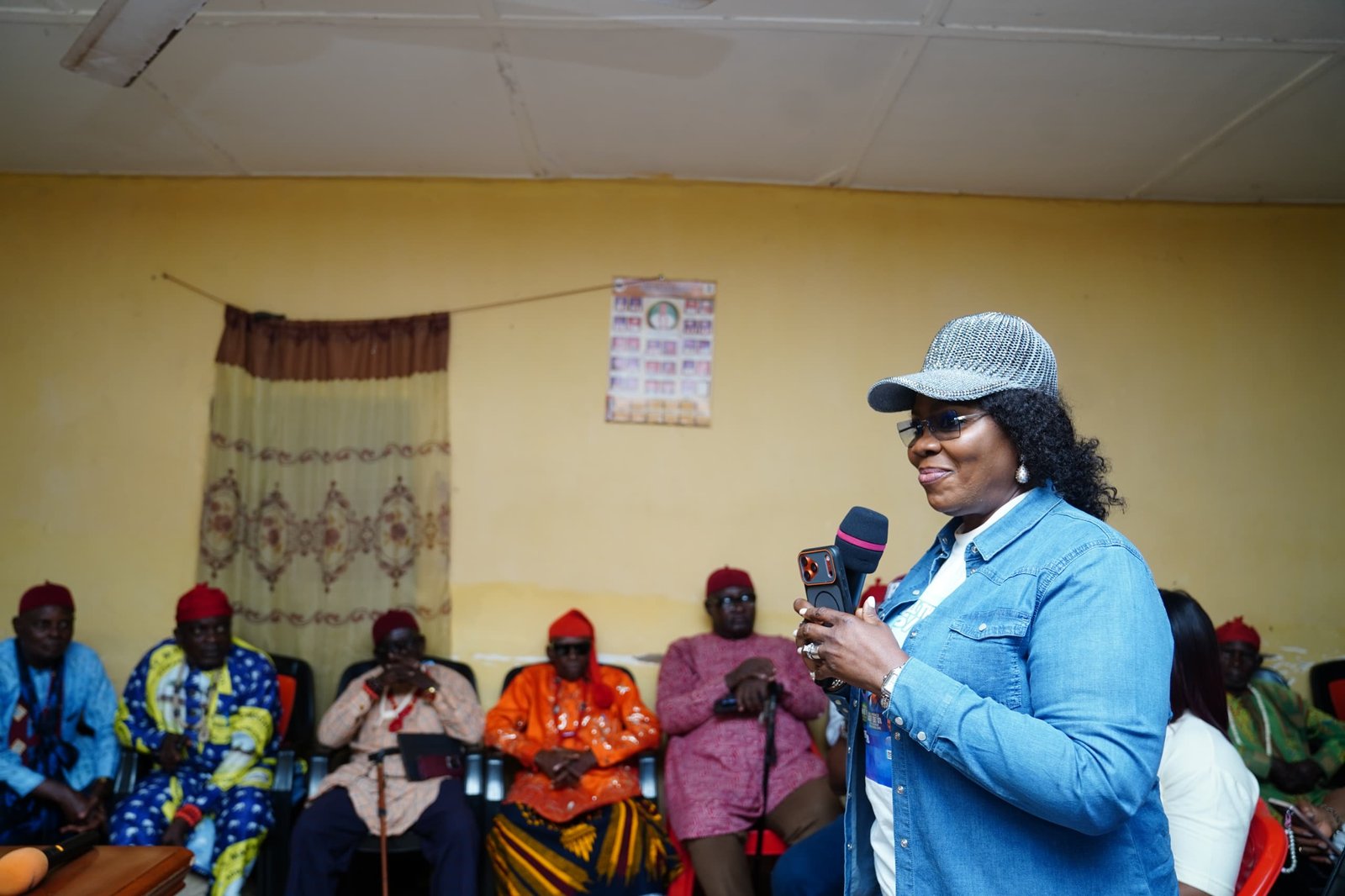
  • Otu’s Wife Distributes 15,712 Empowerment Items in Central, Northern C’River

    Otu’s Wife Distributes 15,712 Empowerment Items in Central, Northern C’River

    By BANNERNEWS Reporter, Calabar

    The wife of Cross River State Governor, Bishop Eyoanwan Bassey Otu, has distributed 15,712 empowerment items across the Central and Northern Senatorial Districts of the state.

    The items were distributed during her Humanity Tour and Empowerment Programme held at Ikom Stadium and McGettrick Institute of Technology, Ogoja, according to a statement issued on Saturday by her Press Secretary, Faith Okon-Egbujiem.

    The statement said 8,183 items were distributed in the Central Senatorial District, while 7,529 went to beneficiaries in the Northern Senatorial District.

    The items included 17 minibuses, 11 tricycles, 33 motorcycles, 55 sewing machines, 50 grinding machines, nine cassava-processing machines, 22 baking ovens and 110 Point-of-Sale machines.

    Other vocational equipment distributed included barbing clippers, hair-washing units, hair dryers, generators and makeup kits.

    The programme also covered agricultural and food supplies, including 3,200 units of fertiliser, 6,622 units of rice, 1,248 units of beans, tomatoes, cooking oil, seasoning and salt.

    Other items included 1,100 wrappers, fish fingerlings, educational materials, seven wheelchairs, four crutches and mother-and-child care kits.

    The statement said Otu met with traditional rulers and other stakeholders in the two senatorial districts as part of the tour.

    Addressing beneficiaries, she urged them to use the items to support their businesses and families, stressing the importance of economic self-reliance.

    “When you empower a woman, you empower a family; when you empower a woman, you empower a community,” she said.

    The programme was organised through the Office of the Wife of the Governor under the Humanity Without Borders initiative.