Tag: Ahiakwo

  • Nigeria Undergoing Clinical, Surgical Operation – Ahiakwo

    Nigeria Undergoing Clinical, Surgical Operation – Ahiakwo

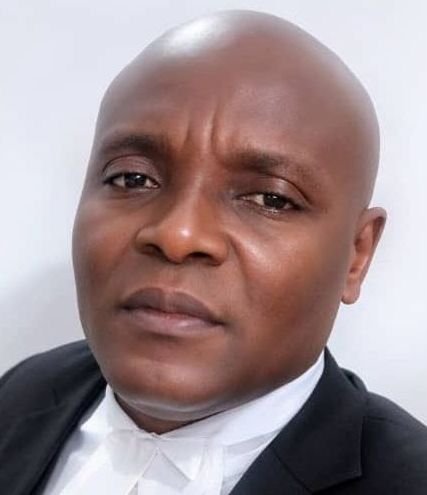
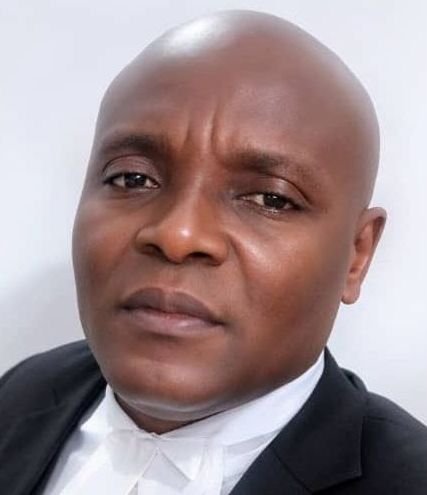
    By Justice Osai Ahiakwo

    It is a defining moment that Nigeria’s Independence Day should be more than a commemoration of the end of colonial rule. It should be a moment of bother on the meaning of freedom and on whether the promise of independence is being translated into security, dignity, justice and opportunity for the Nigerian people.

    Nigeria is undergoing a clinical surgical operation to reclaim her national image and recalibrate her sense of self-discovery.
    The metaphor is deliberate.

    Surgery becomes necessary when a condition can no longer be ignored. It requires an honest diagnosis, careful intervention and the courage to remove what is harmful, repair what is damaged and preserve what is healthy.

    That is the task before Nigeria.

    For many Nigerians, the experience of independence remains burdened by insecurity, economic hardship, unemployment, inequality and the daily struggle to provide basic necessities. Families continue to make sacrifices.

    Young Nigerians continue to search for opportunities.

    Many citizens work hard yet struggle to see the fruits of their labour.
    And still, Nigerians endure.

    But resilience should not become an excuse for permanent hardship.

    The fundamental question is therefore constitutional: what is the purpose of government if the security and welfare of the people are not at the centre of its responsibilities?

    The Constitution provides an important answer. Section 14(2)(a) places sovereignty in the people of Nigeria, from whom government derives its powers and authority, while section 14(2)(b) declares that the security and welfare of the people shall be the primary purpose of government. Section 1 establishes the supremacy of the Constitution and makes its provisions binding on all authorities and persons throughout Nigeria.

    These provisions give meaning to the relationship between the State and the citizen.
    Government is not an end in itself. Public power exists within a constitutional framework and is ultimately exercised in the name of the people.

    The Constitution also sets out broader social and economic objectives. Sections 16 and 17 address matters including economic development, equality of opportunity, the dignity of the individual and social justice.

    As provisions of the Fundamental Objectives and Directive Principles of State Policy, they provide constitutional direction for governance, although they do not operate in the same manner as the enforceable fundamental rights contained in Chapter IV

    That distinction does not make them unimportant. They form part of the constitutional vision against which the conduct and priorities of government should be understood.

    The citizen must remain at the centre of that vision.
    Independence should mean the ability to live without fear, pursue a lawful livelihood, educate one’s children, protect one’s property, seek justice and participate meaningfully in the affairs of the country.

    The law should not be merely an instrument for regulating citizens. It must also serve as a shield against the unlawful exercise of public power.

    Fundamental rights must therefore remain meaningful in the lives of ordinary Nigerians.

    Section 42, for example, protects citizens against discrimination on specified grounds.

    Our diversity should consequently be a basis for inclusion, not exclusion.

    Nigeria belongs to all Nigerians.

    No citizen should have to apologise for his or her ethnic origin, place of birth, religion or political opinion in order to enjoy the protection of the law.

    Constitutional democracy also imposes responsibilities on citizens.

    We cannot demand accountability from those in authority while excusing corruption when it serves our personal interests. We cannot demand justice for ourselves while remaining silent when injustice is inflicted upon another.

    We cannot expect institutions to function properly while treating public responsibility as somebody else’s concern.

    The Constitution provides the framework. Our conduct determines whether that framework becomes a living reality.

    At 66, Nigeria does not need another season of grand promises.

    What is required is disciplined adherence to the constitutional order.
    Government must obey the Constitution.

    Public institutions must perform the functions assigned to them by law.

    Public officers must remember that political authority is held in trust.
    Citizens must know their rights, fulfil their civic responsibilities and insist, peacefully and lawfully, on accountability.

    The surgical operation cannot be accomplished by changing personalities alone. It requires attention to the structures, practices and attitudes that have weakened public confidence in government and public institutions.
    Where the law is clear, it must be obeyed.

    Where institutions are weak, they must be strengthened.

    Where public power is abused, lawful accountability must follow. Where citizens’ rights are violated, constitutional and judicial remedies must remain open and effective.

    And where government policies impose hardship, their human consequences must not be treated as mere statistics.

    The true test of government is ultimately found in the condition of the people.

    At 66, Nigeria must move from the language of aspiration to the discipline of constitutional responsibility.

    Government must remember that sovereignty belongs to the people.

    Let public officers remember that power is a trust, not a private possession.

    Institutions remember that no person or authority is above the Constitution and the law.

    Citizens must remember that democracy survives when citizens participate, question, demand accountability and obey the law.

    And let every Nigerian make a personal commitment to the constitutional values that can hold this country together: justice, equality, dignity, responsibility and respect for the rule of law.

    The work before us is not impossible.
    It is difficult, but necessary.

    The wounds of a nation cannot be healed by denial. They must be confronted. Their causes must be identified. What is harmful must be removed. What is damaged must be repaired. And what is worth preserving must be protected.

    That is the meaning of the surgical operation Nigeria now requires.

    It must be mere celebration Nigeria’s independence. Let us insist that the freedom it represents must be felt in the daily lives of her citizens.

    Let government serve the people..Let the Constitution govern public power. Let institutions answer to the law.

    And let citizens take responsibility for defending the Nigeria they want to inherit.

    May Nigeria’s freedom become meaningful in the lives of her people, and may the Constitution speak not only through its words, but through the justice, security, dignity and opportunity that every Nigerian has a right to expect from a constitutional democracy.

    *Justice Osai Ahiakwo
    Legal Practitioner, Constitutional Lawyer & Public Affairs Analyst
  • Nigeria’s Democracy Plagued By Self-Interest, Not Accountability — Ahiakwo

    Nigeria’s Democracy Plagued By Self-Interest, Not Accountability — Ahiakwo

    By BANNERNEWS Reporter, Calabar

    As Nigeria prepares to mark Democracy Day on May 29, 2026, legal practitioner and public affairs analyst, Justice Osai Ahiakwo, has lamented what he described as the steady decline of democratic values in the country, saying politics has become driven more by personal interests than service and accountability.

    Ahiakwo, in an interview in Calabar on Wednesday, observed that although Nigeria’s democracy has recorded measurable progress since the return to civil rule in 1999, the process through which political leaders emerge has become increasingly troubling.

    According to him, leadership recruitment in the country is now largely shaped by godfatherism, political imposition and loyalty to individuals rather than democratic ideals and institutional integrity.

    He noted that electoral reforms, which ought to strengthen democratic institutions and public trust, are often perceived as tools designed to favour the ruling party and consolidate political control.

    “This trend has gradually eroded public confidence in the democratic process,” he said.

    Drawing comparisons with the United States presidential system, which Nigeria adopted, Ahiakwo argued that the American democracy thrives because of strong institutions, respect for the rule of law, accountability and a clear separation of powers.

    He, however, regretted that in Nigeria, political interference, abuse of power and excessive loyalty to powerful individuals frequently undermine these democratic principles.

    The analyst further stated that many political actors in the country demonstrate little understanding of true federalism, despite attempts to replicate aspects of the American presidential structure.

    He warned that unless governance becomes more service-oriented and public office stripped of excessive material incentives, Nigeria may continue to witness democratic decline.

    Ahiakwo cautioned that if the current trend persists, future leaders could resort to more draconian measures to retain power at the expense of democratic freedoms.


  • Inconsistencies in legislation undermine integrity of 1999 constitution – Lawyer

    Inconsistencies in legislation undermine integrity of 1999 constitution – Lawyer

    By BANNERNEWS Reporter, Calabar

    Concerns are mounting over alleged inconsistencies in Nigeria’s lawmaking process, with legal voices warning that persistent flaws are undermining the integrity of the 1999 Constitution of the Federal Republic of Nigeria.

    A legal scholar, Justice Osai Ahiakwo, said recent legislative developments point to deeper structural weaknesses rather than isolated drafting errors, arguing that the problem reflects a fragile constitutional and procedural framework.

    He cited the Nigeria Tax Act 2025, signed into law on June 26, 2025, but scheduled to take effect on January 1, 2026, as one of several examples raising questions about clarity, consistency, and legislative precision.

    According to him, judicial precedents and constitutional disputes already support these concerns, including the case of Olisa Agbakoba v. National Assembly, where a Federal High Court in 2010 ruled that constitutional amendments made without presidential assent were incomplete and invalid.

    He also referenced disputes surrounding the National Assembly Pensions Board Act, which raised concerns that some laws may have been enacted in conflict with existing statutes and without strict adherence to constitutional requirements.

    In 2018, former President Muhammadu Buhari declined assent to several constitutional amendment bills, citing drafting inconsistencies and structural defects, a move that further highlighted gaps in Nigeria’s legislative process.

    Ahiakwo noted that ambiguity within Sections 58 and 9 of the 1999 Constitution, particularly on presidential assent and legislative override, remains unresolved and continues to generate conflicting interpretations in the courts.

    He also raised concerns about the harmonisation stage of lawmaking in the National Assembly of Nigeria, warning that lack of transparency at this stage may allow substantive changes to bills without full scrutiny.

    He warned that without urgent reforms such as digital tracking of bills, clearer certification of final texts, and stronger legislative oversight, Nigeria risks continuing to produce laws that lack clarity, consistency, and legitimacy.


  • OPINION:  Culture of Media Credibility  

    OPINION: Culture of Media Credibility  

    By Justice Osai Ahiakwo

    The recent face-off between Daniel Bwala and Al Jazeera’s Mehdi Hasan offers a revealing lesson not only for Nigeria’s newly appointed ambassadors, but for a broader class of political figures who have transitioned from vocal critics to defenders of the current administration led by President Bola Ahmed Tinubu.

    In Nigeria’s political environment, such transformations are not uncommon.

    Critics frequently become allies once political alignments shift or appointments are offered.

    However, the modern media landscape is far less forgiving than the political arena at home.

    Past statements are archived, searchable, and easily revived in moments of public scrutiny.

    As a lawyer and now a presidential spokesman, Daniel Bwala must contend with a reality that confronts many political converts, whereby previous criticisms do not simply fade away.

    They become part of the record, and when the moment comes to defend the very administration once criticized, those words inevitably return.

    Unlike figures such as Reno Omokri, who often operate largely within the controlled environment of social media commentary, Bwala encountered direct questioning on an international platform where evasiveness is difficult and contradictions are quickly exposed.

    The interview placed him in the uncomfortable position of reconciling his past statements about Tinubu with his current role defending the administration.

    The result was a moment that quickly circulated online, not because of the policy issues discussed, but because it highlighted the tension between political loyalty and intellectual consistency.

    This episode underscores a wider issue within Nigerian politics: the ease with which public figures abandon previous positions without offering a clear explanation for their change in perspective.

    Political realignment is not inherently problematic.

    People can evolve in their views. But credibility demands transparency about that evolution.

    Without it, the shift appears less like a change of conviction and more like a response to political opportunity.

    For individuals tasked with representing Nigeria internationally, this problem becomes even more serious.

    Diplomats and presidential spokespersons do not merely speak for themselves; they speak for the state.

    Their words shape global perceptions of the country’s leadership, governance, and political maturity.

    Nigeria already struggles with a challenging international reputation shaped by corruption scandals, governance concerns, and persistent political controversies.

    In such an environment, representatives of the country must be especially careful to demonstrate competence, consistency, and intellectual preparedness when facing international media.

    When a spokesman struggles to defend the government under questioning rooted in his own previous comments, it creates an avoidable vulnerability.

    The conversation shifts away from national policy or diplomatic priorities and becomes a personal credibility contest.

    That risk becomes even greater for political figures who have built their reputations through aggressive commentary.

    Femi Fani-Kayode and Omokri, known for their sharp political rhetoric, would likely face similar scrutiny as they are placed in formal diplomatic roles.

    International journalists are not limited by domestic political sensitivities. They are more inclined to confront inconsistencies directly and to press for answers when narratives shift abruptly.

    The lesson here is not simply about one interview or one spokesman.

    It is about the growing accountability imposed by the global information environment.

    Political figures can no longer assume that earlier statements will fade into obscurity.

    Every tweet, interview, and speech becomes part of a permanent archive that can resurface at the most inconvenient moment.

    For Nigeria’s political leadership, this reality should influence how appointments are made, particularly in roles that involve international communication. Loyalty alone is not enough.

    Those chosen to represent the country must possess intellectual discipline, rhetorical skill, and a coherent political record that can withstand scrutiny.

    Diplomatic representation requires more than enthusiasm for the administration of the day.

    It demands the ability to defend national interests with clarity, credibility, and composure under pressure.

    When representatives falter publicly, the consequences extend beyond personal embarrassment.

    In an era where interviews circulate globally within minutes, such moments shape international perceptions of the country itself.

    Nigeria’s global image is already contested.

    Its representatives cannot afford to reinforce negative stereotypes about political inconsistency or opportunism.

    If anything, the Bwala–Hasan exchange should serve as a cautionary moment for Nigeria’s political class.

    In today’s media environment, credibility is not optional. It is the foundation upon which effective representation, at home and abroad, must be built.

    *Ahiakwo is legal practitioner and public issues analyst 

  • Security Reform Must Be Institutional, Not Political As FG Considers State Police – Legal Analyst 

    Security Reform Must Be Institutional, Not Political As FG Considers State Police – Legal Analyst 

    By Justice Osai Ahiakwo

    The recent resignation of the Inspector General of Police may be linked to administrative or political pressures, but the more troubling issue is the weakness of the country’s overall security architecture.

    Changing leadership, though as important as it may be, and in the face of current reality, does not automatically fix deep-rooted structural problems within the policing system.

    Calls to recreate the policing framework through the establishment of state police should not be approached as a political giveaway or a response to sectional demands.

    Such a step must be carefully weighed against the broader imperatives of constitutional order.

    National unity, the integrity of command and control must not be compromised.

    Under the 1999 Constitution of the Federal Republic of Nigeria (as amended), policing is placed on the Exclusive Legislative List, with authority vested in the Federal Government.

    This centralized design was intended to guard against the misuse of coercive power by sub-national actors, a concern that remains valid in a system where democratic institutions are still evolving.

    What is needed, therefore, is not a rushed dismantling of the existing structure, but a deliberate effort to strengthen it.

    A functional policing system must be professionally structured. It must be well-resourced, and firmly guided by clear lines of authority.

    The Nigeria Police Act, 2020 already offers a modern legal framework that emphasizes accountability, community policing, professionalism, and improved welfare.

    The real challenge has not been the absence of laws. It is all about weak implementation, poor funding discipline, and fluctuating political commitment.

    President Bola Tinubu in considering the appointment of a substantive Inspector General of Police should look out for enforcing an effective policing system.

    One which depends heavily on leadership grounded in discipline, merit, and operational independence.

    The office of the Inspector General must operate strictly within the law, shielded from undue political interference.

    It must be fully accountable through recognized oversight institutions such as the Police Service Commission and the National Assembly.

    Without this balance, neither a federal police structure nor any future state-controlled model can deliver sustainable security.

    At its core, Nigeria’s security crisis is institutional rather than merely structural.

    Before extending coercive powers to the states, the Federal Government must demonstrate that the current framework, anchored by the Nigeria Police Force, can function effectively under the rule of law.

    Reform efforts should focus on discipline, intelligence-led policing, inter-agency coordination, and strict adherence to constitutional provisions.

    Anything less risks creating multiple centres of force without addressing the fundamental drivers of insecurity.

    Unlike countries such as the United States of America, Germany, and Japan, where policing structures are supported by robust institutions, clear standards, and adequate manpower, Nigeria continues to struggle with an overstretched police workforce attempting to secure a population of over 200 million people.

    Until this imbalance is addressed, structural changes alone will offer little relief.


    Ahiakwo is a legal expert and public issues analyst based in Calabar, Cross River State 


  • OPINION: Between Competing Mandates -The Uncertain Place in Rivers Loyalists

    OPINION: Between Competing Mandates -The Uncertain Place in Rivers Loyalists

    By Justice Osai Ahiakwo

    Between the political mandate of President Bola Tinubu and the entrenched influence of Nyesom Wike lies a pressing question: Where do Rivers loyalists truly stand?

    The political terrain in Rivers State is no longer defined solely by local alliances or state-level calculations.

    It has evolved into a contest shaped by national power dynamics, strategic positioning, and legislative maneuvering.

    In this shifting landscape, loyalty is being tested, recalibrated, and, in some cases, redefined.

    The coming into force of the 2026 Electoral Act was widely challenged as Section 60 was crafted with intent to manipulate election results.

    This has defeated the true purpose of electronic transition, a milestone intended by the repelled 2022 Electoral Act that seeks to strengthen transparency, accountability, and credibility in Nigeria’s electoral process.

    The original concept was to introduce mechanisms designed to reduce manipulation and improve public confidence in elections.

    Conversely, electoral laws do not operate in isolation from political actors.

    Their effectiveness depends on the integrity of those who interpret and implement them.

    Where political interests dominate institutional safeguards, even well-crafted legislation can be repurposed to serve narrower objectives.

    The release of the 2027 general election timetable by the Independent National Electoral Commission (INEC) signaled the formal commencement of political calculations toward the next electoral cycle.

    Electoral timetables are not mere administrative notices; they shape party primaries, coalition-building, and campaign strategies.

    Yet, the proximity between the release of the timetable and subsequent amendments to the electoral framework raises legitimate concerns.

    When the legal architecture governing elections is altered shortly after timelines are published, it inevitably invites scrutiny regarding motive and impact.

    Amendments to electoral laws are not inherently problematic.

    As democracies evolve, legal frameworks must sometimes be adjusted to address gaps or emerging realities.

    However, drastic or hurried amendments risk destabilizing the status quo and generating perceptions of manipulation.

    Stability in electoral rules is essential to maintaining trust.

    When stakeholders suspect that rules are being recalibrated to favor certain interests ahead of 2027, confidence in the neutrality of the process weakens.

    Within this broader national context, Rivers State occupies a sensitive position.

    Historically marked by intense political rivalry and factional alignments, the state has long grappled with the influence of godfatherism and strongman politics.

    What appears to be changing, evidently, is not the disappearance of these forces relocated.

    The arena of contests is shifting from the state platform to the national stage.

    Political control is no longer exercised solely through local patronage networks; it is increasingly tied to alignment with federal authority, as was the introduction of local government autonomy, creating direct links to the federal government.

    This centralization of political power reshapes loyalty structures.

    Rivers loyalists, particularly those who align with either Tinubu’s national mandate or Wike’s entrenched political influence, must now navigate a more complex terrain.

    Allegiance is no longer simply about state-level solidarity.

    It is intertwined with federal appointments, party machinery, and national calculations.

    In this environment, loyalty risks become transactional rather than ideological.

    The tension between federal influence and state autonomy is not new in Nigerian politics.

    Political actors consolidate influence at the national level by altering the balance within federating units.

    Decisions affecting Rivers and other APC States may increasingly be influenced by considerations external to the state’s immediate interests. For loyalists on the ground, this creates uncertainty:

    Are they defending local mandates, or are they instruments in a broader national chess game?

    Godfatherism and political gangsterism, though often criticized, have traditionally operated within defined state boundaries routinely controlled by some former and sitting governors.

    Their shift toward national coordination suggests a more sophisticated consolidation of power.

    Political survival now depends not only on local dominance but also on strategic proximity to central authority.

    This transformation does not eliminate strongman politics who now is in charge of the national government. It indeed has elevated it.

    For Rivers citizens and political stakeholders, the critical issue is accountability.

    When political influence becomes centralized, it can weaken grassroots participation and diminish local voices.

    Loyalists may find themselves defending positions that reflect national strategies rather than community priorities.

    The danger lies in the erosion of democratic responsiveness to grassroots, where political allegiance overshadows public interest.

    In the coming 2027 general elections, the interplay between legal reforms, national mandates, and state-level dynamics will define the political direction of Rivers State.

    The question remains whether electoral processes will strengthen democratic competition or entrench centralized control.

    Therefore, Rivers loyalists must confront a fundamental choice: align uncritically with power wherever it resides or insist that political mandates, whether national or state, remain accountable to the people.

    The shifting ground of Nigerian politics reflects a broader struggle between institutional integrity and strategic power consolidation.

    Where Rivers loyalists stand will depend on whether they prioritize loyalty to individuals or commitment to democratic principles, a decision that will determine not only political outcomes in 2027 but also the credibility of governance in Rivers State and by extension the Nigeria state.


  • OPINION.  Rivers State Not Venezuela

    OPINION. Rivers State Not Venezuela

    By
    Justice Osai Ahiakwo
    The concluded 17-day tour embarked upon by the Minister of the Federal Capital Territory, widely reported in the media, was presented as a tour of appreciation to supporters from the 2023 general elections. While gratitude in politics is not objectionable and often a precursor to renewed ambition, the timing and context of this exercise make its underlying intent impossible to ignore.
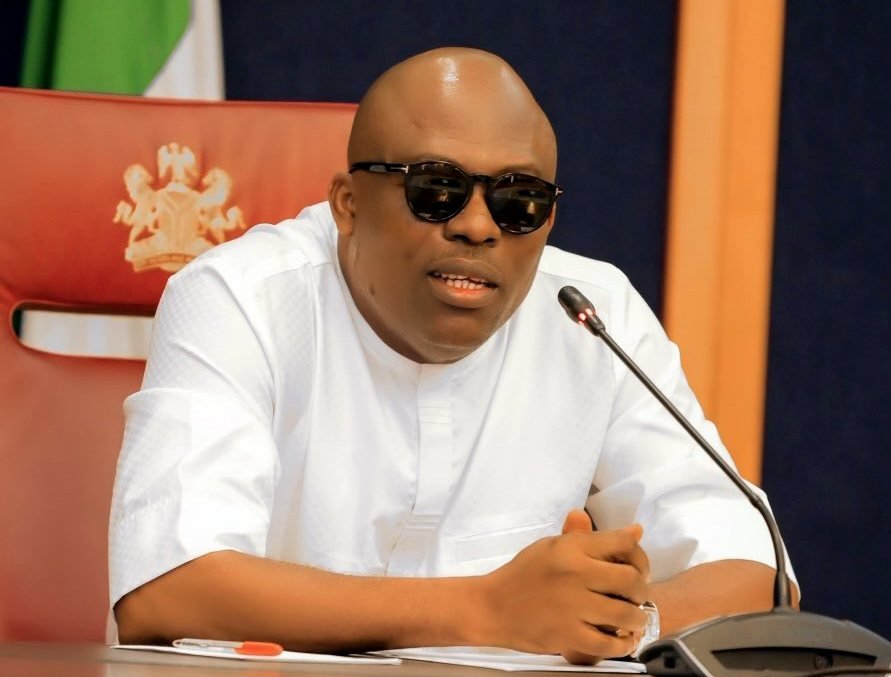
    Politics, by Nyesome Wike’s estimation resumed in January 2026, and the tour coincided with renewed and ill-advised attempts to politically arm-twist the Governor of Rivers State.
    What should have been a benign political engagement instead assumed a confrontational posture.
    Most troubling was the Minister’s public remark likening political developments in Rivers State to the capture of a Venezuelan President through a United States military operation. That analogy is deeply flawed and intellectually careless.
    The U.S. action in Venezuela, whether justified or not, was executed by a sovereign state exercising international power under a specific geopolitical framework.
    It bears no resemblance whatsoever to the crude attempt by a political actor to impose a so-called “gentleman’s agreement” or force a single-term agenda on an elected Governor.
    Rivers State indeed is not Venezuela. The powers exercised by U.S. President cannot, by any stretch of logic, be equated with the deployment of raw political intimidation to unseat Governor Siminalayi Fubara.
    One is a matter of state sovereignty; the other is political coercion masquerading as influence.
    This comparison exposes a deeper problem: a fixation on power devoid of democratic restraint. What is on display is not political sophistication but a troubling erosion of democratic values.


    Incivility, arrogance, and intolerance blur the sanctity of democracy and create space for uncultured political conduct to dominate public life.
    Good governance thrives only where power is exercised with restraint. Democracy suffers when politicians become obsessed with absolute control rather than service.
    The moral lesson is simple but profound: restraint is indispensable in leadership. Pride, arrogance, and unchecked ambition corrode institutions and damage society. Family upbringing, social values, and communal norms all play a role in shaping political character, because society ultimately mirrors the values it tolerates.
    Rivers State must not descend into political chaos driven by ego and entitlement. Greed, avarice, and acrimony have no place in modern democratic politics. The enduring lesson remains—live and let live.