By BANNERNEWS Reporter
The Iranian government has assured Nigerians living in the country of their safety amid escalating tensions in the Middle East involving Iran, the United States and Israel.
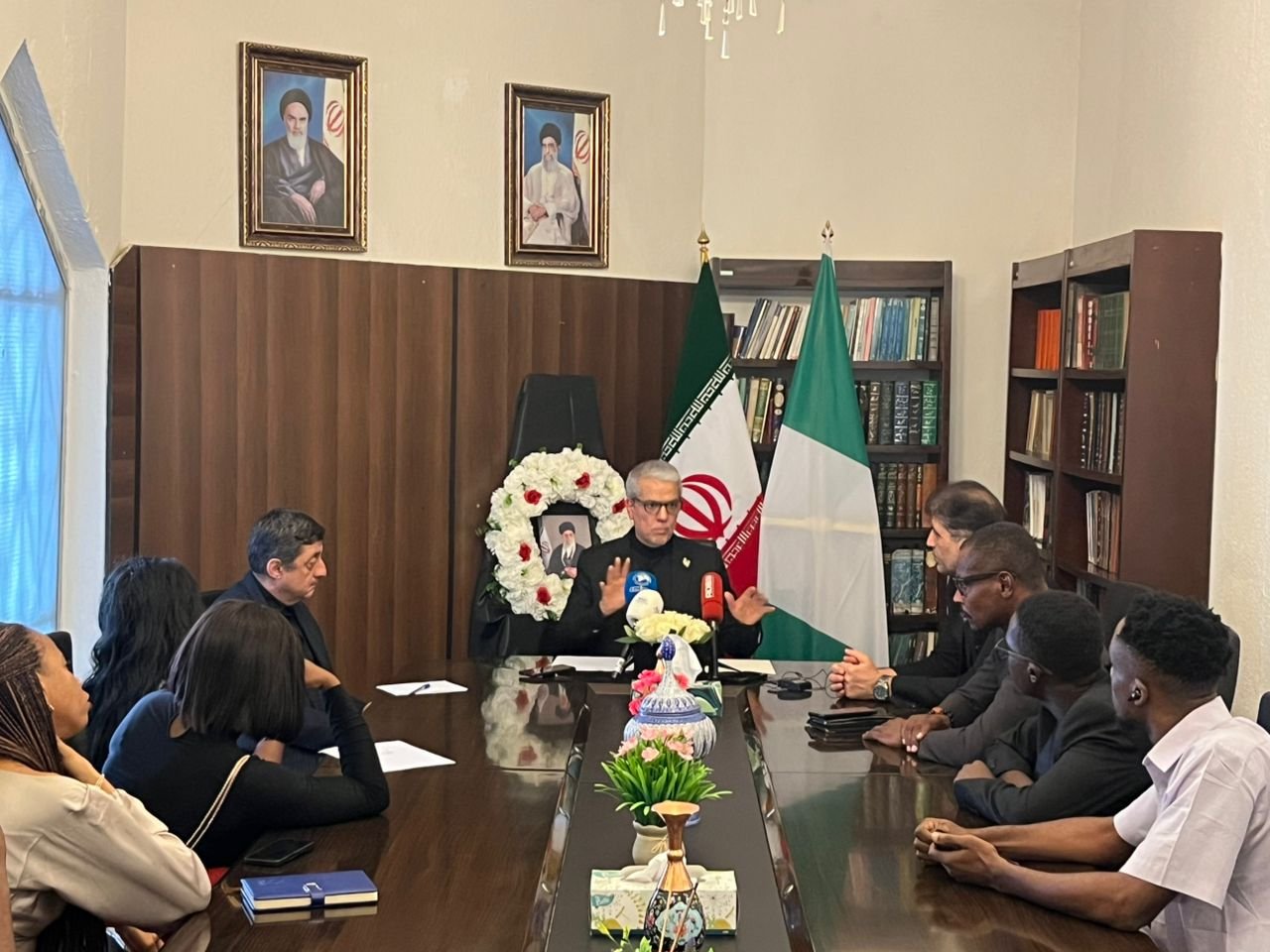
Iran’s Ambassador to Nigeria, Gholamreza Mahdavi Raja, gave the assurance while briefing journalists in Abuja, stating that no Nigerian casualties or injuries have been reported since the recent wave of military confrontations in the region.
According to the envoy, Nigerians currently residing in different Iranian cities, including Tehran and Qom, remain safe despite the heightened security situation.
“Your citizens in Iran are safe and secure, because some of your citizens are in Tehran, some of them are in Qom and other cities. So far, we haven’t received any reports regarding Nigerian casualties or injured,” Raja said.
He urged Nigerians not to panic over the situation, assuring that the longstanding diplomatic relationship between Iran and Nigeria continues to guarantee the protection of Nigerian citizens within the Islamic Republic.
The ambassador noted that the two countries have maintained cordial relations for more than five decades, describing the ties as stable and mutually beneficial across several sectors.
“Our relation comes back to more than 55 years ago. During these decades we have had good relations, and now already we still have good relations,” he said, citing cooperation in areas such as politics, agriculture, energy, education and industry.
Raja, however, condemned recent military attacks on Iran, accusing the United States and Israel of violating international law and the Charter of the United Nations.
“The Islamic Republic of Iran has been subjected to a deliberate and premeditated military aggression by the United States of America and the Israeli regime — an act that constitutes a blatant violation of fundamental principles of international law,” he said.
The envoy alleged that the attacks targeted civilian infrastructure, including hospitals, schools, humanitarian centres and residential neighbourhoods.
Responding to questions from journalists, he maintained that Iran’s recent strikes against United States military facilities in the region were purely defensive and aimed at protecting the country’s sovereignty.
Raja also warned that continued hostilities in the Persian Gulf could disrupt global energy supplies and increase transportation costs, particularly due to tensions around the Strait of Hormuz, a key route for international oil shipments.
Meanwhile, the Islamic Movement in Nigeria has rejected allegations by the Israeli Ambassador to Nigeria, Michael Freeman, who accused Iran of sponsoring terrorism in Nigeria and linked the movement to instability in West Africa.
In a statement issued by its Media Forum, the group described the ambassador’s comments as “false allegations” and “a dangerous attempt to incite tension and chaos among Muslims in Nigeria.”
“The Israeli ambassador’s false allegations against the Islamic movement should be viewed as an alarm for possible false-flag terrorism by the Israelis,” the statement said, while also criticising Israel’s military actions in Gaza and referencing the International Criminal Court warrant against Israeli Prime Minister Benjamin Netanyahu.
The movement insisted that in its five decades of existence it has never been convicted of terrorism, urging Nigerians to disregard the envoy’s claims and reiterating that its support for oppressed groups, including Palestinians, is rooted in humanitarian principles and the pursuit of justice.