By BANNERNEWS Reporter, Calabar
Women from Ekuri community in Akamkpa local government area of Cross River State have expressed worries over the devastating impact of illegal logging on their means of livelihoods, describing the illegal activities in their community as a growing problem that is driving their families into poverty and insecurity.
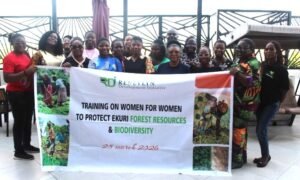
The women made their feelings known while narrating their ordeal during a one day training programme organised by RENEVLYN Development Initiative, for women journalists and the representatives of Ekuri women held in Calabar, the Cross River State capital.
They shared their experiences of how their years of forest conservation efforts are being destroyed by unchecked logging activities that now threaten their survival.
One of the Ekuri women representatives, Mrs. Agatha Egot said Ekuri women have for years sustained a culture of conserving their forest which is over 33,600 hectares of communal land through strict adherence to traditional practices.
She noted, however, that economic hardship and lack of incentives gradually weakened their people, especially their youth, who resolve to illegal logging activities to survive.
“We have been invited to share our own experiences on the effects of the illegal logging activities going on in Ekuri community, in Ekuri we have areas we do our farming, and areas where no one is allowed to go there ”
Egot explained that the degradation of the forest has significantly reduced access to vital resources such as food crops, medicinal plants and non-timber forest products, which women depend on for household sustenance.
According to her, items like afang, editan, atama and ogbono, which they had in abundance and within short distances, have become scarce, forcing women to travel far distances under harsh and unsafe conditions to get it.
She added that they now face poor farm yields and the loss of forest produce have worsened poverty levels among them making it difficult for families to feed and cater for their children’s education.
Also sharing her experience, Freda Francis, Assistant Secretary of Ekuri Women’s Forum, who spoke in pigeon English, said the presence of loggers and unfamiliar armed forces in their forest have increased insecurity in Ekuri, restricting women’s movement and access to farms, and farm produce.
She disclosed that cases of intimidation have been reported, with some loggers allegedly claiming ownership of parts of the community forest.
“We happy wel wel for the meeting wey una call us so, because we the women are not de fear for forest now “……
Francis further stated that logging has disrupted natural water systems, with streams either drying and also been polluted due to falling trees and environmental disturbance.
Other women recounted personal losses linked to logging. narrating a frightening encounter with a large snake while gathering forest products, attributing increased danger to the disturbance of natural habitats
They also pointed out that the loss of medicinal plants has contributed to rising maternal and child birth risks, as traditional birth attendants no longer have access to essential herbs.
They alleged that more than 200 truckloads of timber are transported out of Ekuri daily, while efforts by community members to resist the activities are often met with harassment and intimidation.
The women also lamented that the activities of logging trucks have further destroyed the only access road linking the community to other communities isolating them from other communities and leading to serious economic hardship.
Cocoa farmers also reported several losses, with trees destroyed by illegal logging activities, reducing already limited income sources, and increasing transportation costs due to damaged roads.
Earlier, Renevlyn Development Initiative Project Officer, Linda Amadi, said the training aimed to strengthen media reporting on illegal logging by highlighting the experiences of women who bear the burden of environmental degradation.
Participants at the workshop agreed to amplify advocacy through a Women4Women Network, while the Ekuri women reiterated their demand for legislative action to halt illegal logging and protect their forest-dependent livelihoods.
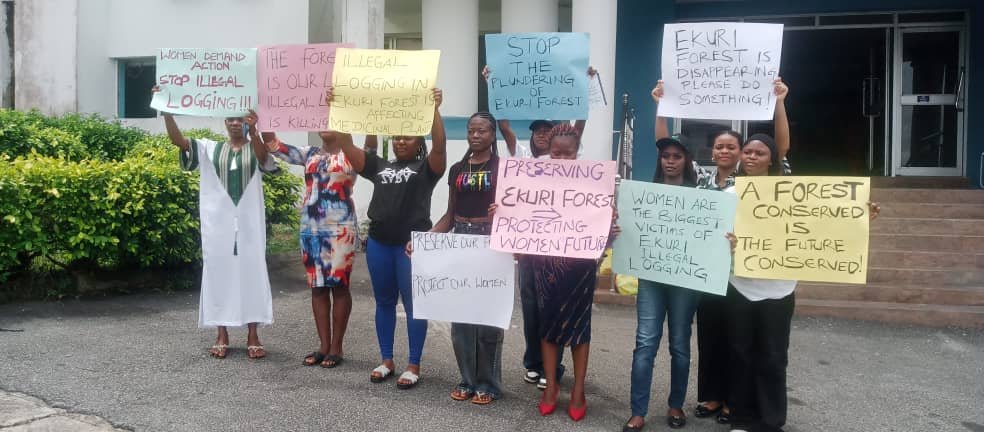
In a petition dated March 26, 2026 to the Speaker of the Cross River State House of Assembly, Elvert Ayambem, the women described the situation as a “relentless plundering” of their forest resources despite years of complaints.