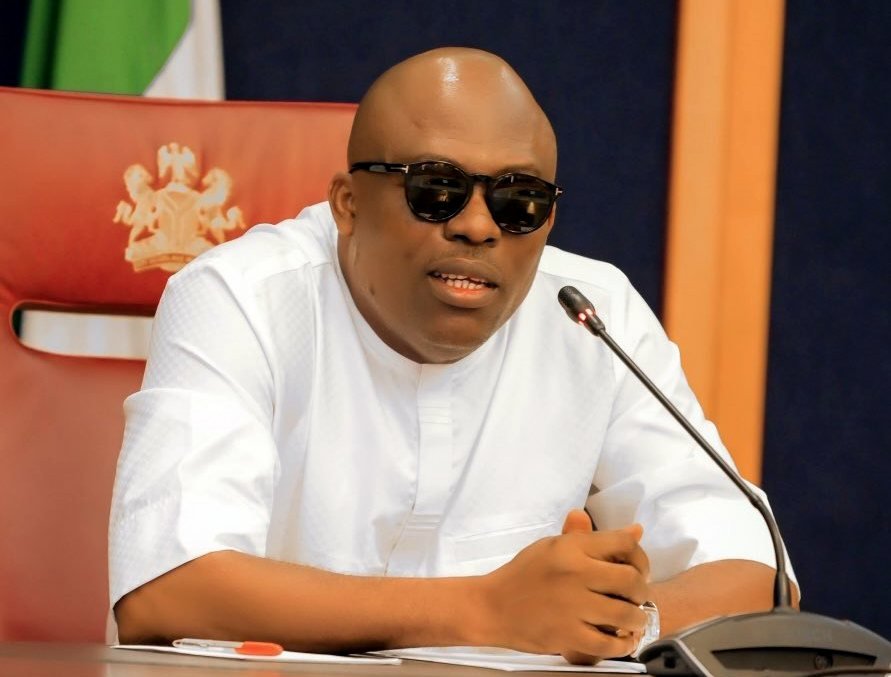
Justice Osai Ahiakwo
The growing anxiety surrounding recent political realignments in Nigeria is assuming a troubling dimension.
Across party lines, political actors and loyalists now struggle to explain unfolding events from conflicting perspectives.
What once appeared to be formidable political coalitions increasingly resemble troubled structures burdened by suspicion, uncertainty, and internal contradictions.
In politics, loud declarations of strength do not always reflect stability.
Sometimes, they merely conceal deeper fractures beneath the surface.
History repeatedly shows that political victories secured through intimidation, suppression, manipulation of institutions, or reckless abuse of influence often produce consequences beyond the calculations of those who engineered them.
Many who once applauded political impunity now appear unsettled by the same atmosphere of instability they previously encouraged.
Recent developments in Rivers State reflect this reality.
The old political order which once appeared untouchable now faces growing legal, political, and moral questions capable of altering the direction of governance within the state.
Particularly significant is the unresolved legal controversy surrounding the eligibility of one of the APC governorship aspirants presently before the Federal High Court in Abuja.
Regardless of the eventual judicial outcome, the dispute itself exposes the fragility beneath the projected image of political supremacy.
Coalitions built mainly on convenience, revenge, or desperation for control rarely sustain long-term cohesion once personal ambitions begin to collide.
Today, even within dominant political camps, genuine peace appears increasingly absent.
Suspicion now thrives where trust once existed, while former allies struggle with conflicting ambitions and growing uncertainty.
Yet the Rivers situation is not isolated. It reflects a broader national pattern that has troubled Nigeria’s democratic experience for decades.
Across the federation, political structures increasingly revolve around powerful individuals rather than enduring institutions.
Loyalty to personalities gradually replaces loyalty to constitutional principles, while elections are too often treated as warfare for territorial dominance and economic control.
From Lagos to Kano, Edo to Zamfara, former political allies repeatedly become adversaries once questions of succession, influence, and control of state resources emerge.
The pattern is familiar; political godfathers who once installed leaders later become locked in bitter conflicts with the same individuals they helped elevate to power.
The result is often governance paralysis, institutional intimidation, legal disputes, and prolonged political warfare.
Even at the national level, coalitions formed in the name of rescuing democracy frequently collapse under the weight of competing ambitions and mutual distrust.
Nigeria’s political environment is increasingly defined by defections without conviction, alliances without trust, and victories without stability.
The consequences for democratic development remain severe.
Public institutions become weakened when loyalty shifts from the Constitution to political patrons.
Security agencies and legislatures risk losing independence, while political appointees prioritize survival within elite camps over accountability to the public.
Ordinary Nigerians meanwhile continue to bear the heaviest burden of these elite struggles.
The tragedy of Nigeria’s politics is that enormous energy is invested in acquiring power, while far less attention is devoted to using power responsibly.
The Rivers crisis therefore represents something larger than an ordinary political disagreement.
It symbolizes the consequences of a political culture built excessively around domination and personal supremacy.
History proves that no political structure built on fear, suppression, or unchecked ambition remains permanently stable. Eventually, contradictions emerge and loyalists become rivals.
Political power may silence opposition temporarily, but it cannot permanently silence legality, truth, or consequence.
Perhaps the only honourable path remaining for Nigeria’s political class is sincere reflection and genuine reconciliation founded on justice, institutional respect, humility, and restraint.
Nigeria cannot continue recycling political vengeance, elite warfare, and institutional destabilization while expecting democratic stability and national progress.
No political structure, regardless of how formidable it appears, survives indefinitely when it wages sustained conflict against fairness, legality, institutional integrity, and the collective conscience of the people.