Justice Osai Ahiakwo
The reported intervention by former Head of State, General Abdulsalami Abubakar, over former Vice-President Atiku Abubakar’s reported 2027 presidential ambition raises a broader question: Is Nigeria ready for genuine generational renewal in political leadership?
The issue should not be reduced to Atiku or to age alone.
Under Section 131 of the 1999 Constitution, as amended, the Constitution prescribes the qualifications for election as President, including citizenship, the minimum age, party membership and sponsorship, and the required educational qualification.
It prescribes no maximum age for presidential candidates. Section 137, which provides for presidential disqualification, similarly does not make advanced age a ground for disqualification.
Atiku cannot be constitutionally disqualified solely because of his age, provided he satisfies the other constitutional and electoral requirements.
Constitutional eligibility is different from political suitability.
The Constitution determines who may contest, the electorate determines who should govern. Nigerians are entitled to consider age alongside fitness, stamina, experience, capacity, relevance and the demands of the presidency.
The same standard must apply to everyone, including the incumbent.
Age should neither be used selectively against Atiku nor ignored when considering other aspirants.
Nigeria certainly needs generational renewal; replacing an older politician with a younger politician does not necessarily change the political system.
A younger face operating an old political system can reproduce the same old failures.
Youth alone is therefore not a qualification for the presidency. Nigeria needs leaders—young or old—with competence, integrity, intellectual capacity, economic understanding, national vision, respect for the rule of law and the ability to build strong institutions.
At the same time, experience should not become a permanent claim to political power.
The older generation should increasingly use its experience to mentor younger leaders, strengthen institutions and facilitate responsible succession.
The electorate also has a responsibility. If Nigerians continue to place ethnicity, religion, money, personality and political connections above competence and character, changing the age of the occupant of Aso Rock will not necessarily improve governance.
The 2027 presidential election should therefore not be a contest between the old and the young.
It should be between established political habits and credible national renewal.
What has each candidate achieved? What does the candidate understand about Nigeria’s problems.
Can the candidate unite the country, strengthen institutions, protect the rule of law, secure the nation and manage the economy.
It is not whether Atiku is too old or whether the younger generation is ready.
Who, regardless of age, has the competence, character, capacity, integrity and vision to lead Nigeria into a better future.
Nigeria does not merely need a younger President.
Nigeria needs a new standard of leadership.
Donald Duke’s contestation over Atiku’s incessant ambition of becoming the president of Nigeria can not be a barrier preventing Atiku.
It’s a matter of constitutional right conferred on Atiku.
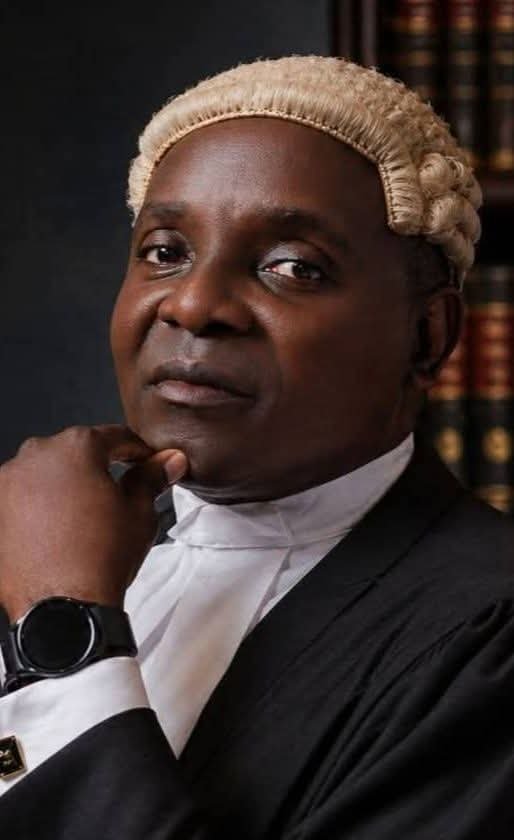
Justice Osai Ahiakwo is a legal practitioner and public commentator