By BANNERNEWS Reporter, Sokoto
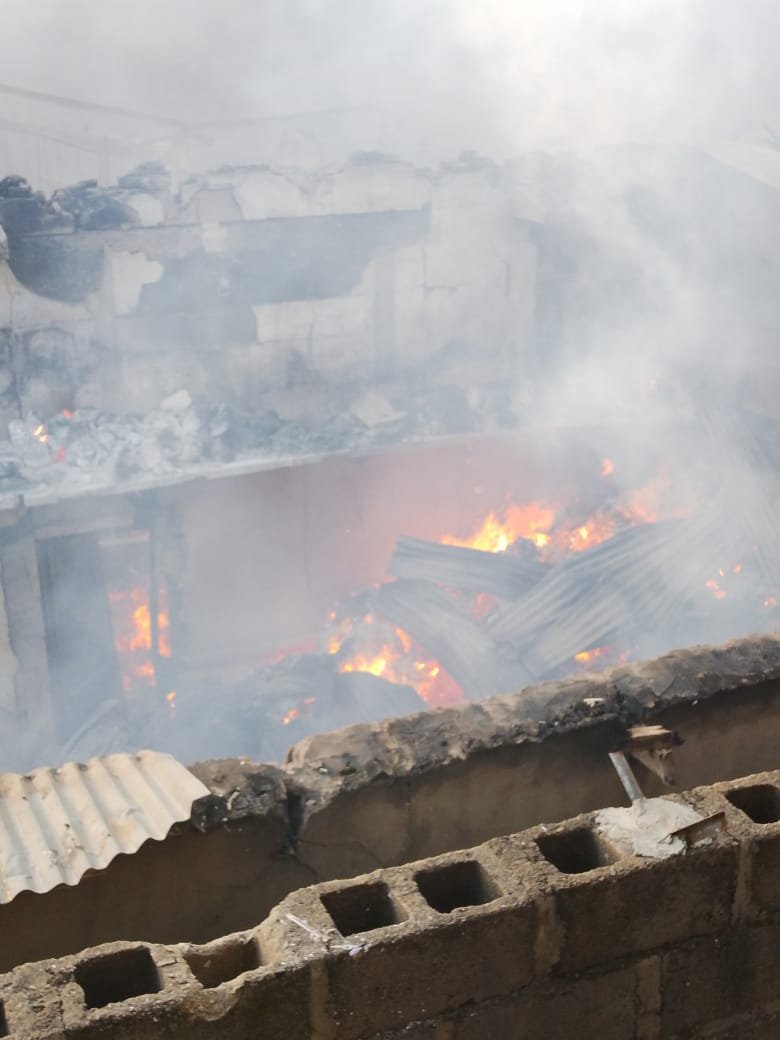
Fresh concerns over a possible spike in onion prices have emerged in Sokoto State after fire outbreaks destroyed more than 10,000 bags of onions across three communities within one week.
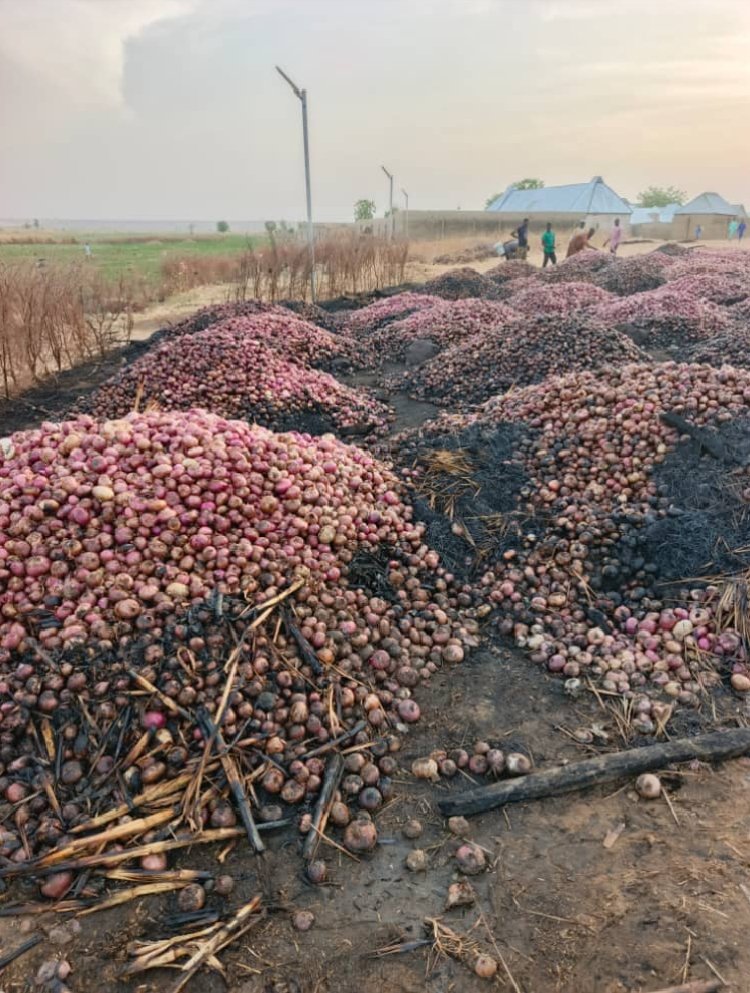
The latest incident occurred on Friday in Duhuwa village, where fire gutted 324 onion storage huts, each containing about 18 bags, destroying 5,832 bags valued at over N204 million.
National President of the Nigerian Onion Producers, Processors and Marketers Association of Nigeria (NOPPMAN), Aliyu Maitasamu Isah, said the estimate was based on the prevailing village price of N35,000 per bag.
The incident followed similar outbreaks in Kojiyo village, Goronyo LGA, where 2,275 bags worth about N56.8 million were lost, and Dundaye, where over 2,000 bags were also destroyed, bringing total losses to over 10,000 bags in seven days.
Affected farmers described the incidents as devastating, warning that the destruction could worsen food prices and deepen hardship for farming families.
“This is like a test from God. We are left with nothing because this is our food and our source of livelihood,” said Bashiru Muhammadu, who lost 260 bags.
Residents said the Duhuwa fire started around 2pm while many villagers had gone for Juma’at prayers and spread rapidly across storage huts and nearby homes.
Another farmer, Muddaha Yusuf, blamed the scale of destruction on the absence of a nearby water source, saying he and his brother lost about 260 bags.
The village head of Duhuwa, Magaji Salihu, described it as the worst loss the community had ever witnessed, noting that over 300 huts were razed and farmers were left in distress.
NOPPMAN President Isah said the repeated outbreaks had become suspicious and the association had reported the incidents to security agencies, including the DSS and the police, for investigation.
He warned that cumulative losses estimated at nearly N500 million could trigger scarcity and sharp price increases, while appealing to government, NEMA, SEMA and well-meaning Nigerians to support affected farmers.