Eyo Charles, Calabar
The Federal Government has been urged to invest heavily in marine science and ocean resource development to unlock the vast economic opportunities embedded in Nigeria’s maritime sector.
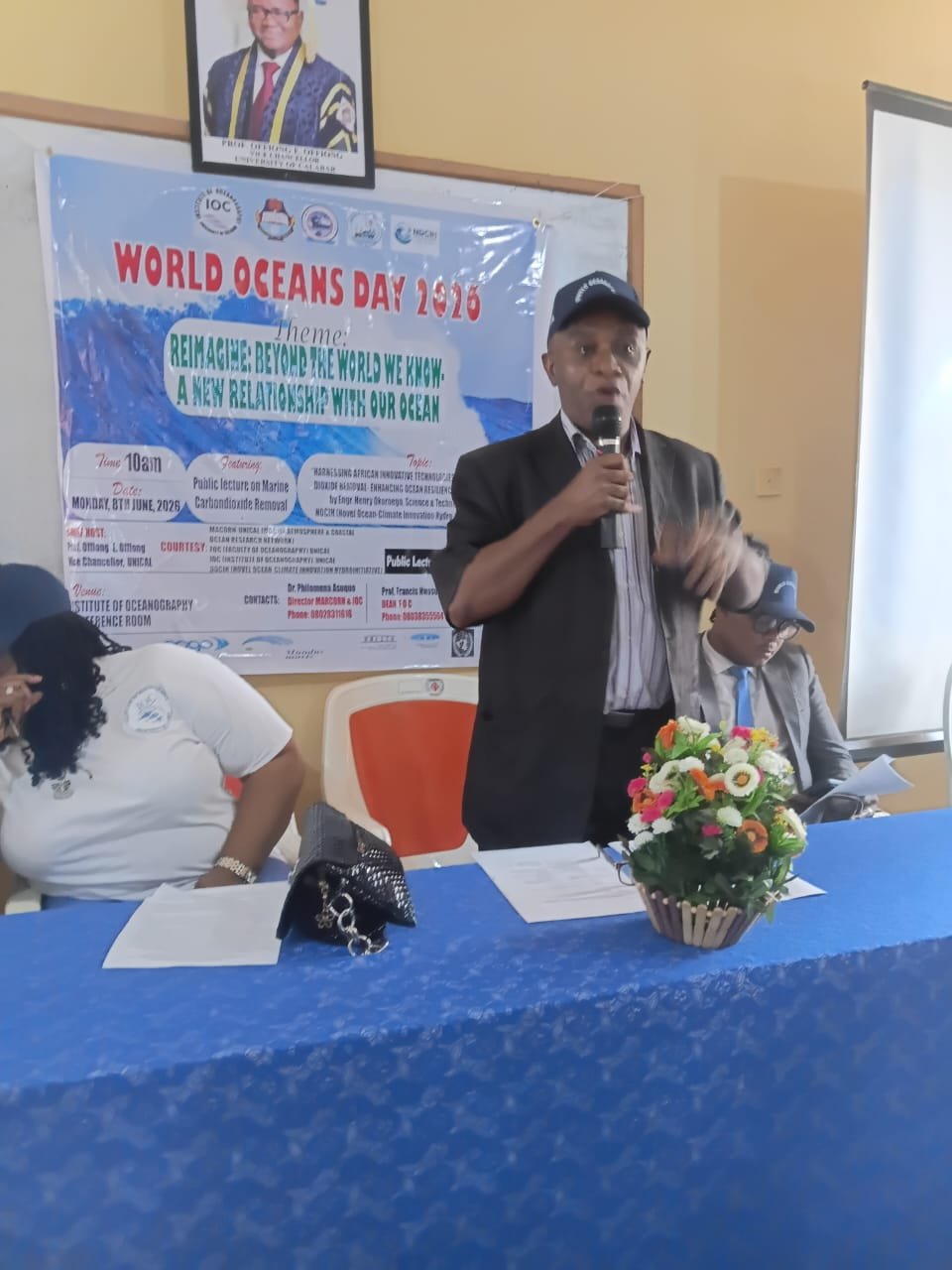
Dean of the Faculty of Oceanography, University of Calabar (UNICAL), Prof. Francis Nwosu, made the call during the 2026 World Oceans Day celebration organised by the Faculty and Institute of Oceanography.
The event was themed, “Reimagine: Beyond the World We Know – A New Relationship With Our Ocean.”
Prof. Nwosu said Nigeria’s ocean resources remain largely untapped despite their enormous potential to drive economic growth, enhance food security and improve the livelihoods of coastal communities.
He stressed that strategic investments in marine science, research and manpower development would help unlock the nation’s blue economy.
According to him, World Oceans Day serves as a reminder of the collective responsibility of nations to protect marine ecosystems while harnessing their resources for sustainable development.
The dean stated that UNICAL is well-positioned to lead marine research and development in Nigeria, but requires adequate funding and modern facilities to fully explore and utilise the country’s vast ocean resources.
He warned that coastal communities and cities face increasing threats from climate change and environmental degradation, calling for greater investment in conservation efforts to protect lives, livelihoods and marine biodiversity.
Prof. Nwosu also appealed to the university management to prioritise marine sciences and strengthen student training programmes to maximise opportunities in research, innovation and the emerging blue economy.
Commending President Bola Ahmed Tinubu for establishing the Federal Ministry of Marine and Blue Economy, he described the move as a strategic recognition of the economic value of Nigeria’s oceans and waterways.
He noted that the ministry could drive investment, regulation and sustainable exploitation of marine resources if supported with adequate funding and political commitment.
The oceanography expert lamented that Nigeria has explored less than one per cent of its coastal waters, despite oceans covering about 71 per cent of the earth’s surface.
He said the country’s maritime domain remains underutilised, with immense untapped potential for economic development and food production.
Guest speaker and Science and Technology Manager at Novel Ocean-Climate Innovation Hydro-Initiative, Engr. Henry Okoroego, called on policymakers and stakeholders to place marine ecosystems at the centre of national development planning.
He said investments in ocean data, clean technology and community-based monitoring would be critical to reversing ocean degradation and strengthening the resilience of coastal communities.
The event attracted students, academics and other stakeholders, and featured interactive discussions on marine biodiversity, climate change, ocean conservation and career opportunities in the blue economy.